- Home
- »
- 6 Days Rongai Route Kilimanjaro Trek
6 Days Rongai Route Kilimanjaro Trek
Climb Mount Kilimanjaro on the 6 Days Rongai Route Kilimanjaro Trek, a scenic and less-crowded path to the summit. This unforgettable adventure includes 2 nights of comfortable hotel accommodation and is led by expert guides from Hike Kilimanjaro, ensuring a safe, well-supported, and truly rewarding experience
Tanzania
8 Days
Moderate
Trekking / Hiking
5,895 m(19,341 ft)
Jun-Oct, Dec-March
Hotel/Camping
Included
Kilimanjaro Airport
Country
Tanzania
8 Days
Challenging
Trekking / Hiking
5,895 m(19,341 ft)
Jun-Oct, Dec-March
Hotel & Huts
Included
Tour Highlights
- Remote Northern Route: Begin your climb on Kilimanjaro’s quieter northern slopes, offering solitude and stunning scenery.
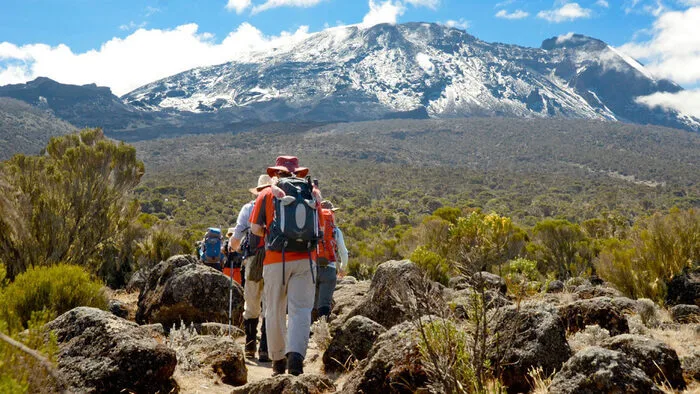
- Scenic Wilderness Experience: Trek through alpine forest, moorlands, and barren highlands with panoramic views of Kenya’s Amboseli plains.
- Gentle Climb Profile: Rongai is the only route that approaches from the north, with a gradual ascent ideal for trekkers seeking an easier acclimatization path
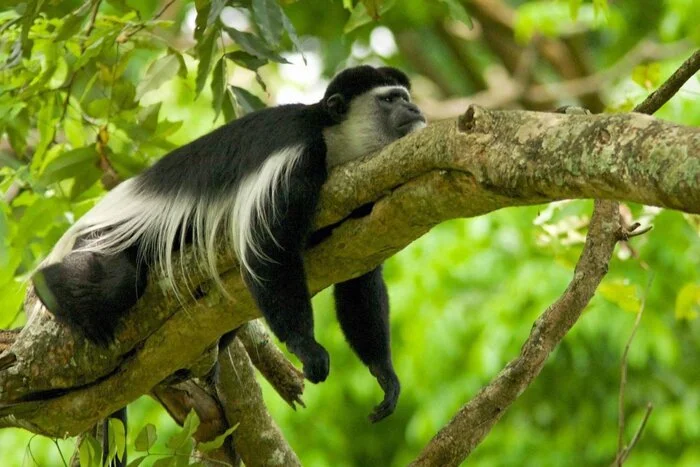
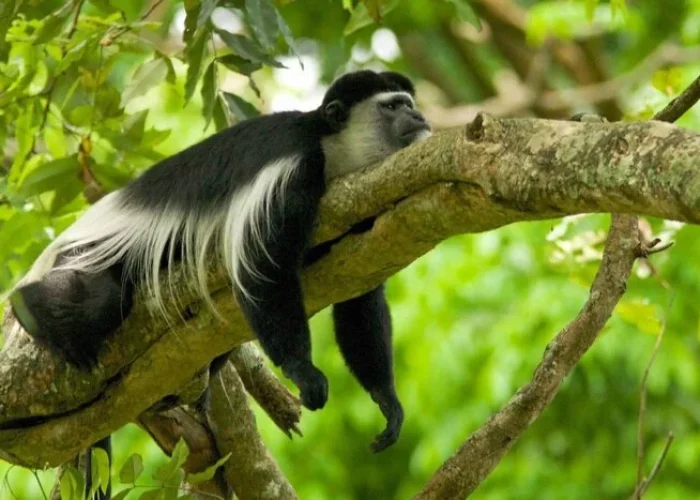
- Less Traffic, More Wildlife: Encounter colobus monkeys and rare bird species in the forest zone, Rongai is less frequented, allowing for a richer nature experience
- Expert Local Guides: Hike Kilimanjaro provides experienced guides, porters, and chefs to ensure your trek is safe, enjoyable, and culturally immersive.
- Summit via Gilman’s Point: Reach Uhuru Peak via Gilman’s Point, offering breathtaking sunrise views from the roof of Africa.
- Return via Marangu Route: Enjoy a diverse descent down the southern slopes, completing a scenic cross-section of the mountain.
6 Days Rongai Route Kilimanjaro Trek Overview
Embark on an unforgettable 6-day adventure with Hike Kilimanjaro on the Rongai Route, the only trail that approaches Mount Kilimanjaro from the remote northern side. Known for its unspoiled wilderness, low traffic, and gradual ascent, this route offers a unique perspective of Africa’s highest peak.
Your journey begins in lush rainforest near the Kenyan border, where you may encounter colobus monkeys and a variety of birdlife. As you gain altitude, the landscape transforms dramatically from heather-covered slopes to high alpine desert culminating in a thrilling summit push via Gilman’s Point to Uhuru Peak (5,895m), the highest point in Africa.
Ideal for trekkers seeking a quieter and more solitary route, the Rongai trek also provides excellent acclimatization opportunities due to its slower elevation gain. With professional mountain guides, supportive staff, and carefully planned acclimatization, Hike Kilimanjaro ensures a safe, scenic, and rewarding summit experience.
6 Days Rongai Route Kilimanjaro Trek Itinerary
Day 01: Arrival in Tanzania
Upon arrival at Kilimanjaro International Airport (JRO), you will be welcomed by a representative from Hike Kilimanjaro Ltd and transferred to Weruweru River Lodge in Moshi or to a similar Lodge. After check-in, you will have a full briefing with your guide, including a gear check to ensure you’re fully prepared for the trek.
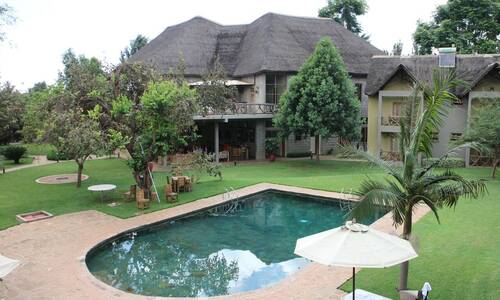
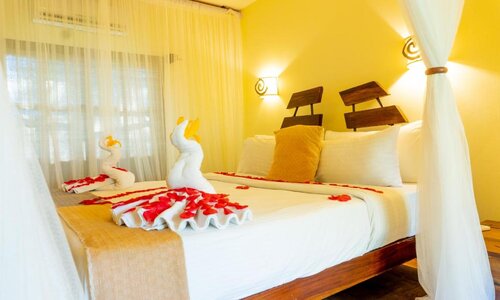
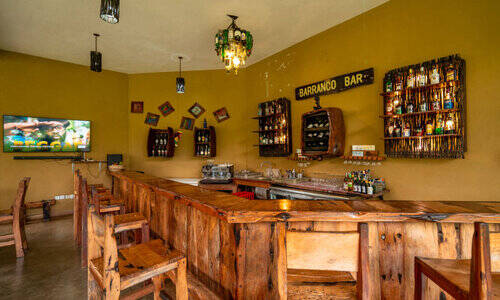
- Overnight at Weruweru River Lodge
- Breakfast included
Note:
The pre-trip briefing will take place at our office if you arrive before 4:00 PM, and at your hotel if you arrive later in the evening. Please ensure you bring a copy of your passport and a readable copy of your travel insurance policy to the meeting. These documents are required for us to obtain your trekking permits and complete necessary documentation for the trek.
Please also note that hotel check-in is from midday (12:00 PM). If your flight arrives early in the morning, kindly let us know in advance. We can arrange a day-use room for you, or, if you prefer, we can organize some short activities to keep you engaged until your check-in time.
Day 2: Rongai Gate (1,950m) to Simba Camp (2,600m)
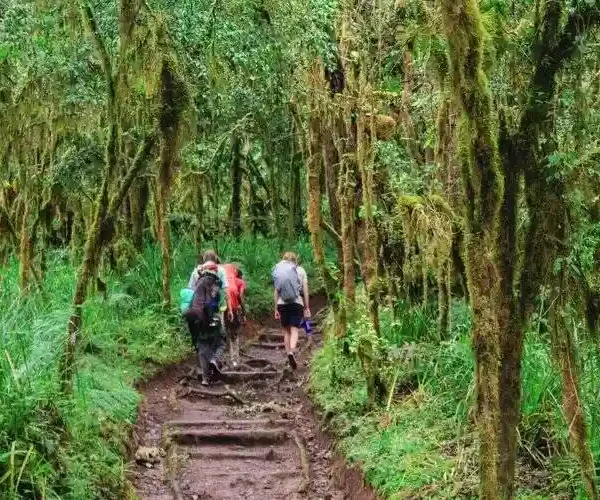
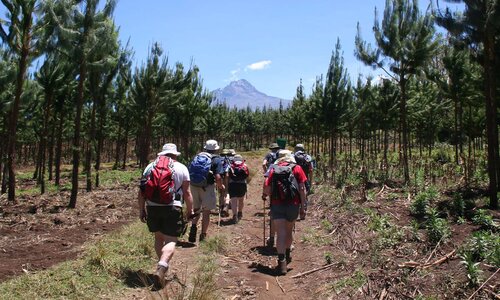
After breakfast and a drive from Moshi or Arusha to the remote Rongai Gate near the Kenyan border, we begin the trek through a quiet forest trail. The hike is gentle and offers the chance to spot colobus monkeys and various bird species.
- Hiking time: 3–4 hours
- Distance: ~8 km
- Elevation gain: 650m
- Overnight: Simba Camp
- Breakfast, Lunch and Dinner included
Day 3: Simba Camp – Second Cave – Kikelewa Camp
The trail climbs steadily through moorland to Second Cave for a short rest, then continues towards the jagged peaks of Mawenzi. Overnight at the scenic Kikelewa Camp nestled in a sheltered valley.
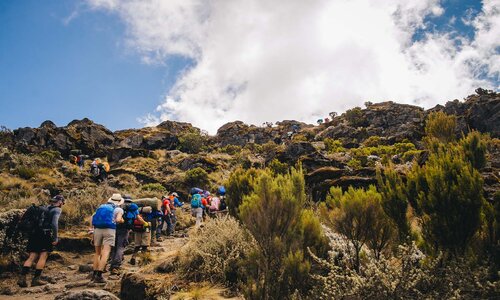
- Distance: 10 km
- Hiking Time: 6–7 hours
- Elevation: 2,650 m to 3,600 m
- Overnight at the scenic Kikelewa Camp
- Breakfast, Lunch and Dinner included
Day 4: Kikelewa Camp – Mawenzi Tarn Camp
Today’s hike is shorter but steeper, with rewarding views. Reach Mawenzi Tarn Camp, set beneath the towering Mawenzi Peak, where you’ll have the afternoon to rest or take an optional acclimatization walk..
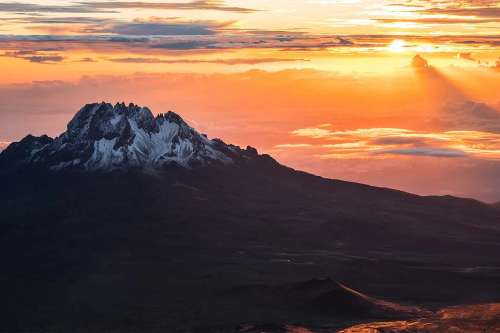
- Distance: 8 km
- Hiking Time: 4–5 hours
- Elevation: 3,600 m to 4,330 m
- Overnight: Mawenzi Tarn Camp
- Breakfast, Lunch and Dinner included
Day 5: Day – Mawenzi Tarn to Kibo Hut (4,700m)
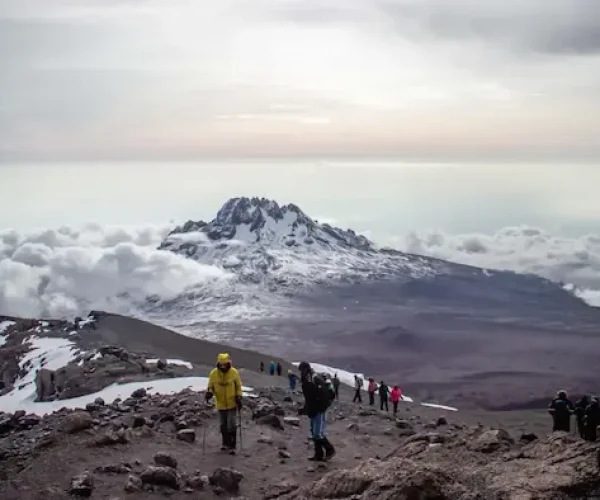
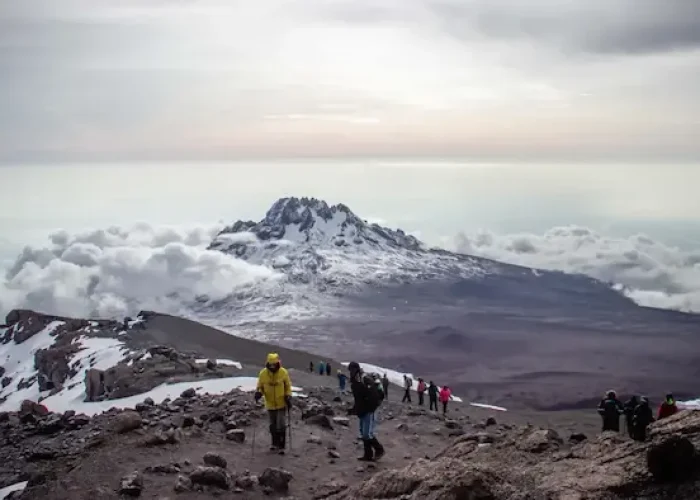
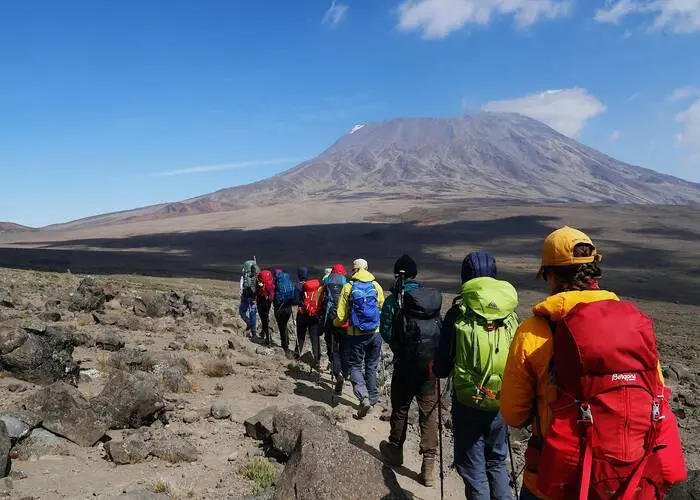
We cross the lunar-like Saddle between Mawenzi and Kibo to reach Kibo Hut, our base for the summit push. The landscape is stark and dramatic. We rest early and prepare for a midnight ascent.
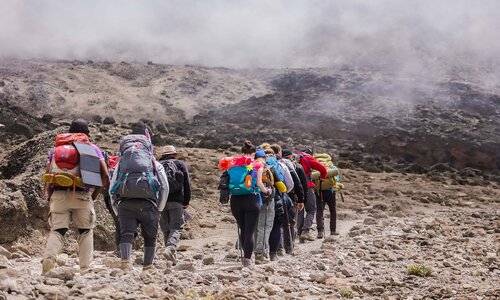
- Hiking time: 4–5 hours
- Distance: ~8 km
- Elevation gain: 370m
- Overnight: Kibo Hut
- Breakfast, Lunch and Dinner included
Day 6: Kibo Hut – Uhuru Peak (5,895m) – Horombo Hut (3,720m)
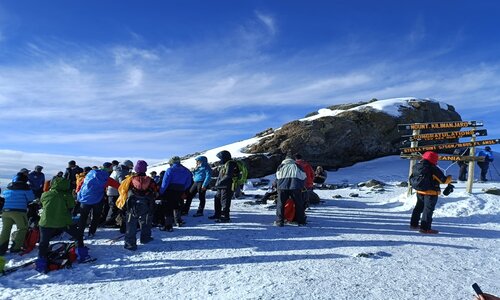
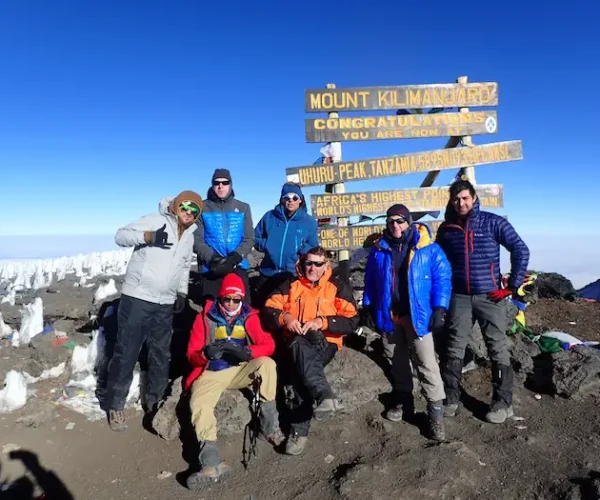
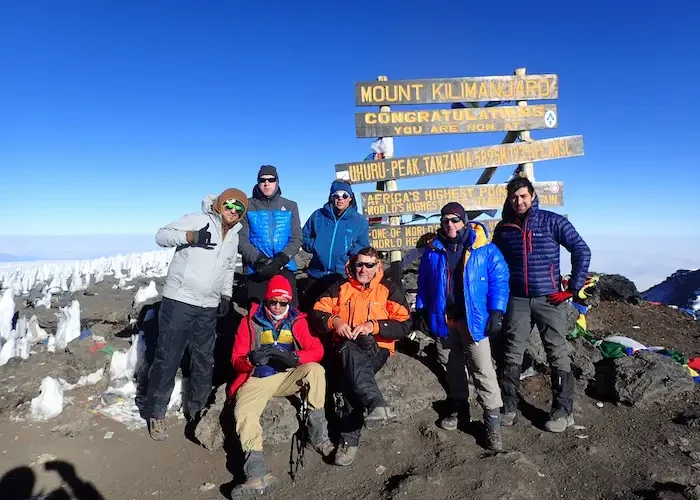
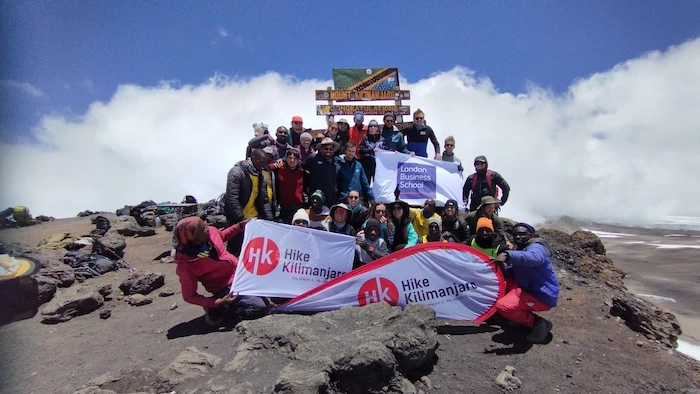
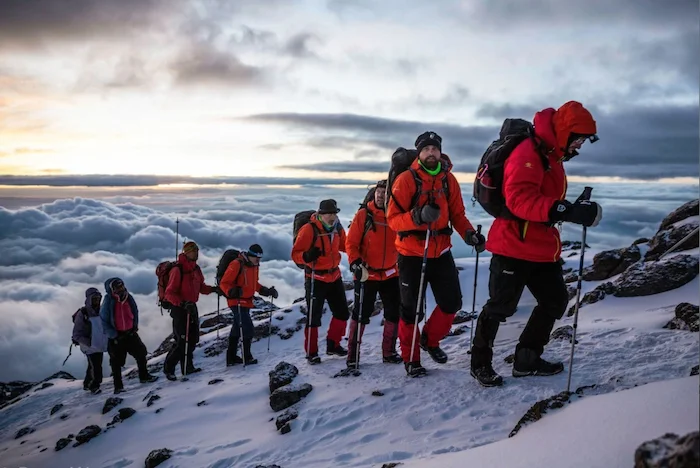
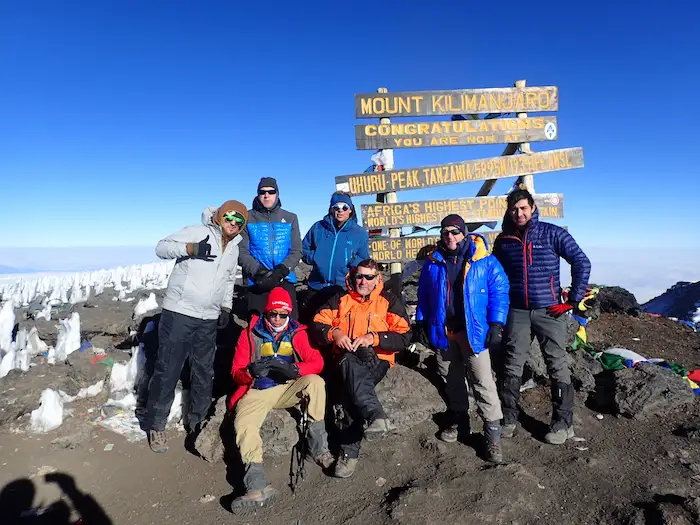
The summit attempt begins around midnight. We ascend to Gilman’s Point (5,685m) on the crater rim and continue to Uhuru Peak, the highest point in Africa. After sunrise and celebration photos, we descend to Kibo for brunch and continue to Horombo Hut for a well-earned rest.
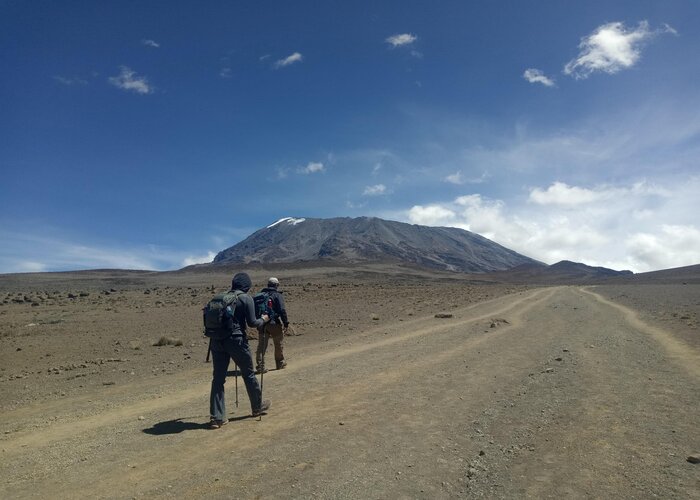
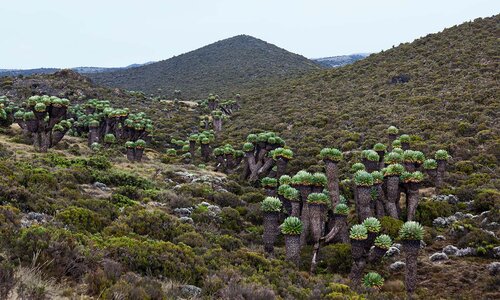
- Hiking time: 12–15 hours
- Distance: ~22 km total
- Elevation gain: 1,195m ascent, 2,175m descent
- Overnight: Horombo Hut
- Breakfast, Lunch and Dinner included
Day 7: Horombo Hut to Marangu Gate – Transfer to Moshi or Arusha
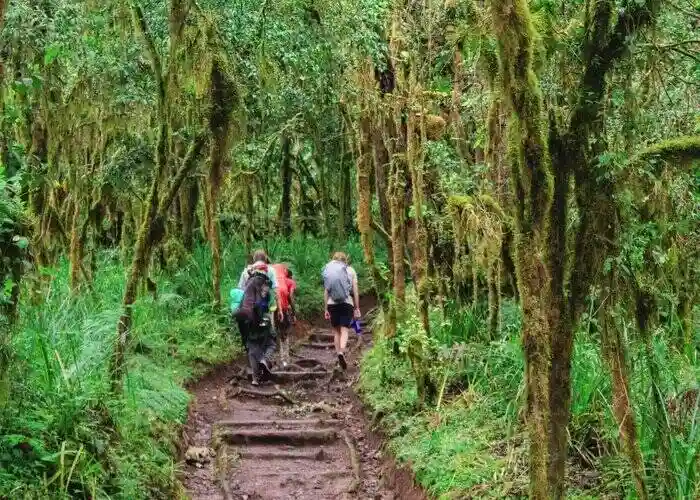
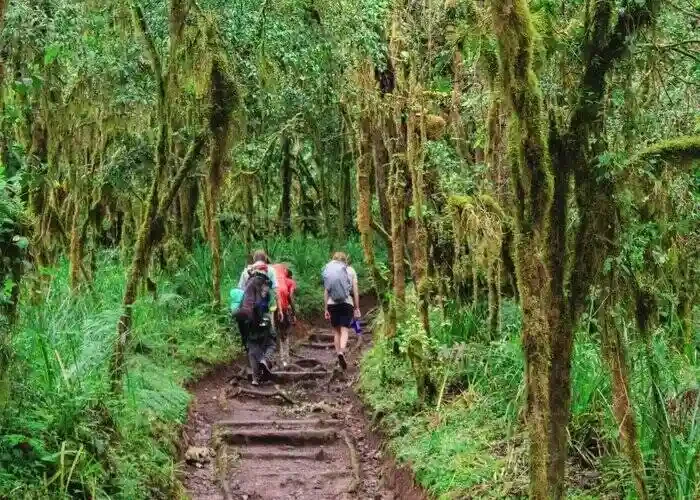
On your final day, you’ll descend through the lush montane rainforest, surrounded by the rich sights and sounds of Kilimanjaro’s vibrant lower slopes. The trail can be muddy and slippery, especially after rainfall, so we recommend using trekking poles and taking care when stepping.
Upon arrival at Marangu Gate, you’ll receive your official Kilimanjaro summit certificate from the national park authorities, a proud token of your achievement in reaching Uhuru Peak. A freshly prepared hot lunch will be served at the gate.
Your Hike Kilimanjaro driver will be ready to welcome you and transfer you back to Moshi or Arusha. It’s the perfect moment to relax, reflect on your unforgettable journey, and celebrate your successful summit of Africa’s highest mountain.
- Hiking time: 12–15 hours
- Distance: ~22 km total
- Elevation gain: 1,195m ascent, 2,175m descent
- Overnight: WeruWeru River Lodge
- Meals: Breakfast and Lunch
Day 8: Departure Day
After breakfast, depending on your flight schedule, you will be transferred to Kilimanjaro International Airport (JRO) for your departure.
- Breakfast included
Note:
Check-out time at the hotel is 10:00 AM. If your flight is scheduled for the evening or night, you may book a day-use room to rest and freshen up before your departure. Please inform us in advance if you would like us to reserve a room for you.
This 6-day Rongai Route trek is best suited for trekkers with good fitness levels and a desire to avoid the busier southern routes. The Rongai trail’s gradual ascent and dry conditions make it one of the easier routes in terms of terrain, but summit night is still demanding. We recommend spending a night in Moshi or Arusha before and after the trek to rest and acclimate. Hike Kilimanjaro provides all logistical support, experienced guides, quality equipment, and porter services to ensure your safety and comfort throughout the journey.
The best airport to fly into is Kilimanjaro International Airport (JRO). Located about 45 km from Moshi and 50 km from Arusha, it is the most convenient airport for climbers.
Hike Kilimanjaro Ltd can arrange airport transfers from Kilimanjaro International Airport to your hotel and back. Please note that transfers are available at an additional cost—just let us know your flight details in advance, and we’ll handle the rest.
Alternative Airports
If you cannot find a flight directly to Kilimanjaro International Airport, you may also consider flying to:
- Nairobi International Airport (NBO) – Kenya
- Julius Nyerere International Airport (DAR) – Dar es Salaam, Tanzania
From these airports, you can connect to Kilimanjaro by either:
- A connecting flight to Kilimanjaro International Airport (JRO)
- A shuttle bus or private transfer to Moshi or Arusha, where your trek begins
For convenience, Nairobi is closer to Kilimanjaro than Dar es Salaam, and often offers more international flight options at competitive prices.
International Flights to Kilimanjaro Airport (JRO)
Several major airlines offer direct flights to Kilimanjaro International Airport:
| Airline | Route |
|---|---|
| KLM | Amsterdam → Kilimanjaro |
| Condor | Frankfurt → Kilimanjaro |
| Turkish Airlines | Istanbul → Kilimanjaro |
| Kenya Airways | Nairobi → Kilimanjaro |
| Precision Air | Nairobi → Kilimanjaro |
| Qatar Airways | Doha → Kilimanjaro |
| Ethiopian Airlines | Addis Ababa → Kilimanjaro |
| RwandAir | Kigali → Kilimanjaro |
If direct flights are not available from your location, you can also book flights via Dar es Salaam or Nairobi, then connect to Kilimanjaro.
Domestic Flights within Tanzania
For flights within Tanzania, the following airlines operate regular domestic services:
- Precision Air
- Air Tanzania
- Fly540
- Regional Air
- ZanAir
- Coastal Aviation
- Air Excel
Bus Transfers
We can also arrange shuttle bus services between Nairobi, Arusha, and Moshi. These are available daily for an additional fee.
Sample Shuttle Schedule (subject to change):
| Route | Departure | Arrival |
|---|---|---|
| Nairobi → Arusha | 08:00 | 14:00 |
| Nairobi → Arusha | 14:00 | 18:30 |
| Nairobi → Moshi | 08:00 | 15:30 |
| Moshi → Nairobi | 06:00 | 14:00 |
| Arusha → Nairobi | 08:00 | 14:00 |
| Moshi → Nairobi | 10:30 | 18:30 |
| Arusha → Nairobi | 14:00 | 18:30 |
Private Transfers
For added comfort and flexibility, private transfers can also be arranged between:
- Nairobi ↔ Arusha / Moshi
- Dar es Salaam ↔ Arusha / Moshi
- Mombasa ↔ Arusha / Moshi
Private transfers are available at an extra cost. Contact us for current rates and arrangements.
Price For 6 Days Rongai Route Kilimanjaro Trek
Number of Pax
Price Per Person
2
USD 2430 pp
3 to 5
USD 2,340 pp
6 to 7
USD 2,190 pp
8 to 12
USD 1,995 pp
Inquire Now
Looking for personalized experience? We organize privately guided journey which is mainly designed to fit your taste and interest. Please fill out the form below to get started.
Price Includes
- Airport transfers (to and from Kilimanjaro International Airport)
- Two nights hotel accommodation in Arusha (one night before and one night after the trek, with breakfast included)
- Comfortable, high-quality, four-season mountain tents (shared by two climbers)
- Mess tent for dining and shelter
- Sleeping mattress
- All park entry fees, camping fees, and rescue fees
- Professional, experienced mountain guides (Wilderness First Responder certified)
- Assistant guides, cooks, and porters to support you throughout the trek
- Emergency oxygen cylinder carried on the trek for safety purposes
- Pulse oximeter monitoring (daily health checks)
- All meals during the trek (breakfast, lunch, dinner), freshly prepared by our mountain chef
- Drinking water (filtered and treated)
- Summit certificate from Kilimanjaro National Park
- Fair wages for guides, cooks, and porters (following Kilimanjaro Porter Assistance Project guidelines)
- Transfer to and from the Kilimanjaro National Park gate
- Pre-climb briefing with your guide
Price Excludes
- International airfare to and from Tanzania
- Tanzania entry visa fees
- Travel insurance (mandatory and must cover high-altitude trekking and emergency evacuation)
- Tips for guides, porters, and cooks (recommended guidelines will be provided)
- Personal trekking gear (sleeping bags, trekking poles, etc.)
- Lunch and dinner in Arusha (except breakfast at the hotel)
- Additional hotel nights beyond those included in the itinerary (if required)
- Personal expenses (such as souvenirs, snacks, and laundry)
- Beverages other than those served with meals (soft drinks, alcohol)
- Optional activities or excursions before or after your trek
- Half-day room use if your departure flight is late and you wish to rest after check-out (available at extra cost)
- Portable power banks or solar chargers for electronic devices
Packing List for 6 Days Rongai Route Kilimanjaro Trek
To ensure a safe and comfortable trek with Hike Kilimanjaro Ltd, we recommend the following essential gear and equipment. Proper preparation is key to enjoying your climb and reaching the summit successfully.
- Sun hat or cap (wide-brimmed or with neck cover is ideal)
- Knitted hat / Beanie (for warmth at higher altitudes)
- Scarf / Neck Gaiter / Buff (highly recommended for dust, wind, and cold)
- Headlamp (with extra batteries – essential for summit night)
- Sunglasses (with high UV protection and polarized lenses)
Torso (Upper Body Clothing)
- Technical fabric base layers (1 light for warmer days, 1 heavier for cold conditions; synthetic or merino wool preferred)
- Technical trekking shirts – 2 short-sleeve and 2 long-sleeve (breathable, moisture-wicking)
- Fleece jacket or pullover (for insulation during cool evenings and mornings)
- Insulated down or synthetic jacket (optional but highly recommended for extra warmth on summit night)
- Waterproof and windproof shell jacket (with hood; Gore-Tex or similar material to protect against rain and wind)
Lower Body (Legwear)
- Technical fabric base layer leggings (lightweight for warmer days, heavier thermal for cold nights)
- Hiking pants (2 pairs; lightweight, quick-dry, and breathable)
- Comfortable pants (for relaxing at camp and sleeping, such as joggers or fleece pants)
- Waterproof and windproof shell pants (to wear over hiking pants in rain or high winds; essential)
- Hiking shorts (optional – for the lower, warmer sections of the mountain)
Hands
- Lightweight liner gloves (wool or technical fabric; good for mild conditions and as a base layer)
- Insulated outer gloves or mittens (waterproof and windproof; essential for summit night and cold weather)
Feet
- Warm socks (wool or technical fabric; essential for cold nights and summit day)
- Hiking socks (several pairs; moisture-wicking and breathable)
- Liner socks (optional, such as silk or synthetic, to help prevent blisters)
- Trekking/Hiking boots (waterproof, insulated, and well broken-in)
- Ice Cleats / Micro Spikes (recommended from December to February) – helpful for icy or slippery conditions on the higher slopes.
- Casual shoes (for wearing around camp after trekking, such as sneakers or slip-ons)
- Gaiters (lightweight for dust or heavy-duty for snow during the wet season)
- Tip: Bring enough socks to change regularly, keeping your feet dry and blister-free.
- Note: Our guides carry a basic first aid kit and essential medications during the trek. However, we highly recommend bringing your own personal kit with any specific items you may need.)
- Sunscreen (SPF 30 or higher; essential for high-altitude sun exposure)
- Lip balm (with SPF protection)
- Antiseptic ointment (for cuts, blisters, or minor wounds)
- Cough syrup (dry air and cold temperatures can irritate the throat)
- Mosquito repellent (for lower elevations or time spent before/after the trek)
- Tip: Always consult with your doctor before traveling to ensure you have the right medications for high-altitude trekking.
Other Essentials
- Passport (valid, with necessary visas)
- Reusable water bottles (2 bottles of 1L each are recommended)
- Hydration bladder (like a CamelBak, 2–3L capacity, useful for summit night)
- Water purification tablets or UV water purifier (optional, as filtered water is provided, but good as backup)
- Toiletry kit (toothbrush, toothpaste, wet wipes, hand sanitizer, etc.)
- Quick-dry towel (small or medium size)
- High-protein snacks (such as energy bars, trail mix, or nuts).
- Waterproof/dry bags (to protect important documents, electronics, and money)
- Airline tickets (Please leave a copy of your flight details with our office for coordination and in case of schedule changes.)
- Tip: Always keep important documents in sealed, waterproof pouches to protect them from rain and moisture.
Optional
Once you are in Tanzania, you have the option to rent all necessary gear from us or purchase supplies and hiking equipment if you have spare time before your trek. Our guide will be happy to assist you in finding and buying any required gear.
Important Luggage and Gear Information
Each participant is allowed one duffel bag, which should weigh between 10 to 14 kg.
This bag will be carried by our porters throughout the trek.
You will also need to carry your own daypack (with a waterproof cover) for daily essentials such as cash, important documents, water bottle or hydration bladder, camera, snacks, energy bars, toiletries, sunscreen, extra clothing layers, and other personal items.
Any extra luggage (non-trekking items) can be safely stored at your hotel in Arusha or Moshi during the trek.
Gear Rentals:
Down jacket with hood (mandatory above 4,000m): Available to rent from Hike Kilimanjaro Ltd. for USD 30
Sleeping bag (suitable for high-altitude cold conditions): Available to rent from Hike Kilimanjaro. for USD 30
Note: All essential mountain gear is available for rent.
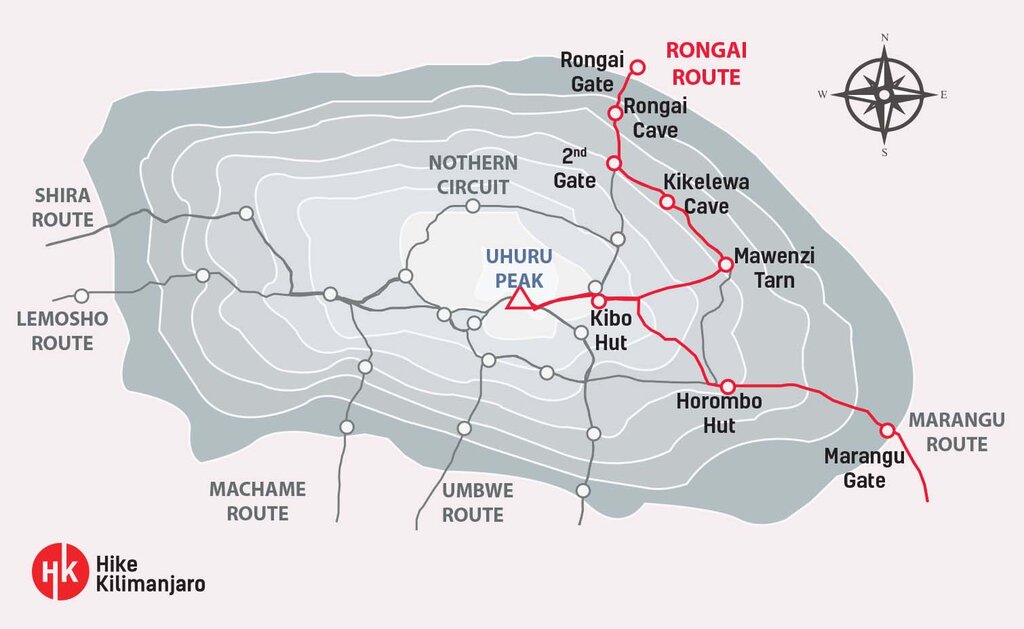
Rongai Route Trek Map
These full and frank reviews are from travelers who have traveled with Hike Kilimanjaro previously. The reviews and experiences shown here are from reputable travel websites like TripAdvisor, Google, Facebook, and Trust Pilot, etc.
Trip Photos
What makes this trip
different?
Hike Kilimanjaro
Company
- At Hike Kilimanjaro, we are committed to supporting the communities surrounding our trekking routes and wildlife safaris. We believe that tourism should be a force for good, and we actively give back to those who help make your adventure possible.
- A portion of our profits goes toward providing food, clothing, books, pens, and other essentials to orphaned children helping improve access to education and basic needs. By traveling with us, you directly contribute to creating a positive impact in local lives.
Sustainability and Responsible Tourism
- Of the few Travelife Certified companies in Tanzania, Hike Kilimanjaro is one. We respect the procedures for sustainable tourism. Our excursions are socially and environmentally conscious, leaving the lowest possible impact in the Tanzanians.
- 100% of Hike Kilimanjaro Company's staff members are natives of the regions where our trips are organized. It is one of our sustainable and responsible efforts to help local communities, support small businesses, and promote regional culture and way of life.
Related Information
Trekking the Rongai Route to the summit of Mount Kilimanjaro offers a unique experience that combines scenic solitude, gradual ascent profiles, and a rare approach from the mountain’s northern side near the Kenyan border. To help you prepare for this incredible journey, we’ve compiled expert tips and answers to the most frequently asked questions. Whether it’s your first time climbing Kilimanjaro or you’re seeking a quieter trail with excellent success rates, this guide will ensure you’re informed, confident, and ready for the adventure of a lifetime.
How Difficult is the Kilimanjaro Rongai Route?
The Rongai Route is considered one of the easier routes on Mount Kilimanjaro in terms of gradient and daily trekking distances. The gradual ascent and less steep terrain make it suitable for beginners or those with moderate fitness. However, because acclimatization time is shorter than on longer routes, trekkers must still prepare well to minimize the risk of altitude sickness.
What is the Success Rate of the 6-Day Rongai Route?
The 6-day Rongai Route offers a summit success rate of around 70% to 75%, depending on individual fitness and altitude adaptation. While the route has a gentle slope, the shorter itinerary means less time to acclimatize. For better odds, consider extending to a 7-day version, but our 6-day package includes professional guides and proven acclimatization strategies to maximize your chance of success.
What Makes the Rongai Route Unique?
The Rongai Route is the only trail that approaches Kilimanjaro from the northern side, near the Kenyan border. It is one of the quietest routes on the mountain, offering solitude, dry weather, and unique views of Kilimanjaro’s less-traveled side. The route also increases your chances of spotting wildlife like colobus monkeys and antelope in the early stages of the trek.
Is the Rongai Route Less Crowded?
Yes. Compared to the popular Machame and Marangu routes, the Rongai Route is much less crowded. This makes it ideal for trekkers seeking a more private and peaceful climbing experience. Even during peak trekking season, the trail remains relatively quiet and untouched.
What is the Weather Like on the Rongai Route?
The northern side of Kilimanjaro is drier than the southern routes, so the Rongai Route is a great choice during the rainy seasons (March–May and November). While temperatures still drop significantly at higher altitudes, you are less likely to encounter muddy trails or heavy rain on this route.
What Accommodation is Provided During the Trek?
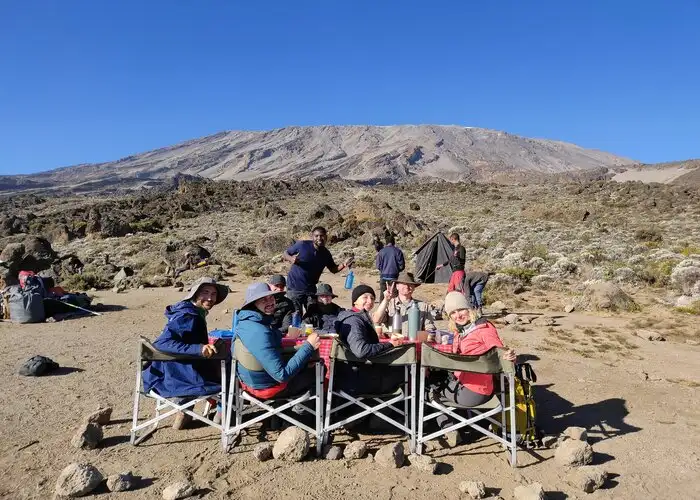
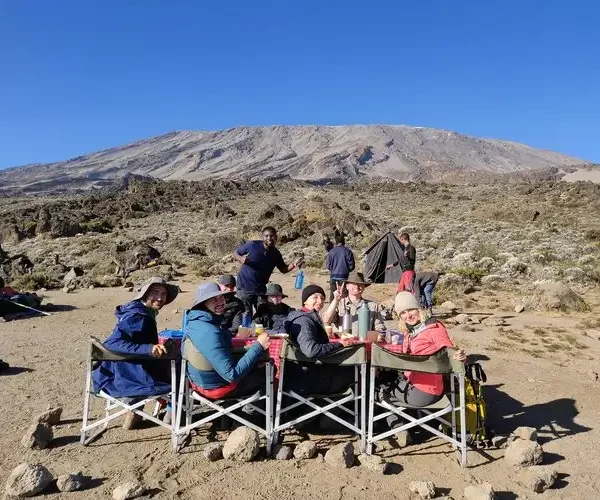
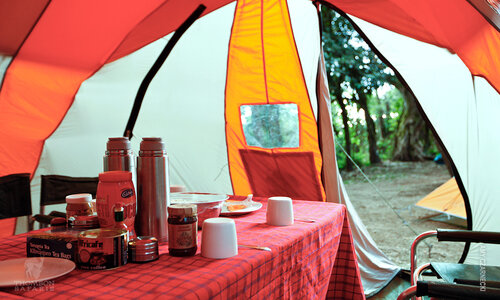
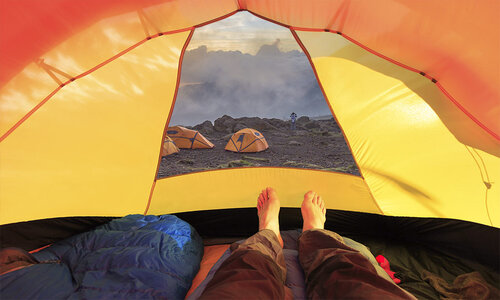
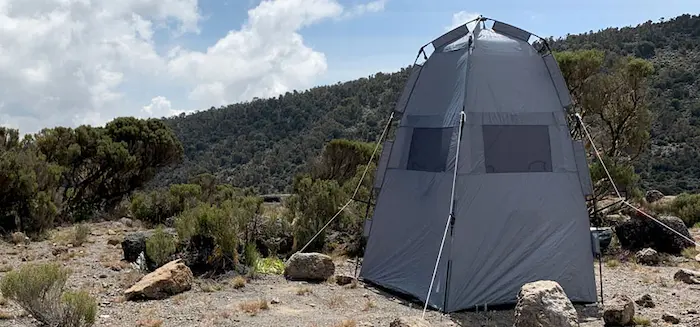
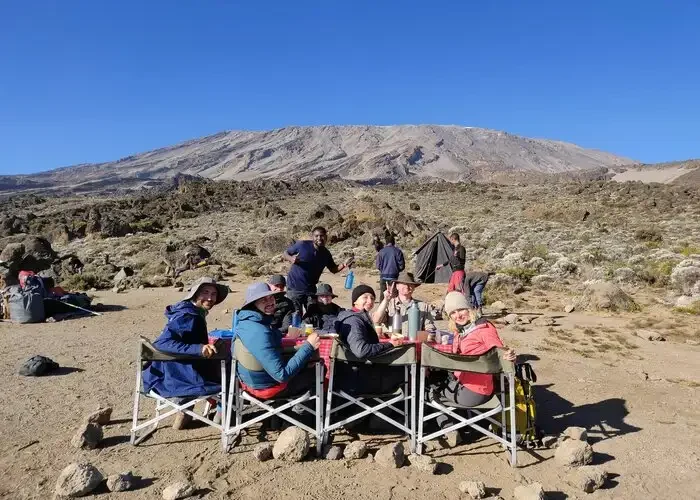
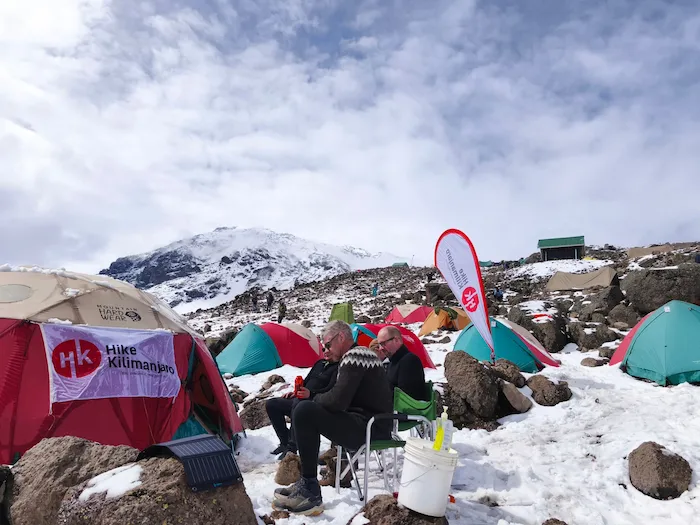
On the Rongai Route, trekkers stay in high-quality, four-season mountain tents. These tents are pitched by the support crew at designated campsites. You’ll also have access to a private toilet tent for your group, a shared dining tent with chairs and tables, and all meals prepared by our professional mountain chefs
What Kind of Meals Are Provided?
We serve hot, nutritious meals three times daily, including breakfast, lunch, and dinner, with snacks provided between meals. Our menus are designed to be high in energy and altitude-appropriate, with fresh fruit, soups, rice, pasta, vegetables, meat, and vegetarian options available. We also accommodate dietary restrictions upon request.
What is Included in the 6-Day Rongai Route Package?
Your Kilimanjaro trekking package with Hike Kilimanjaro includes:
- Two nights of hotel accommodation in Arusha
- All park fees, camping equipment, and rescue fees
- Professional English-speaking mountain guides
- Porters and cooks
- Private toilet tent
- All meals and water on the mountain
- Transfers to and from the trailhead
- Certificate of completion
Do I Need to Train for the Rongai Route?
Yes. Even though Rongai is one of the easier routes, trekking Kilimanjaro is a serious physical challenge. We recommend training for at least 6 – 8 weeks before your trek, focusing on cardio, strength, and hiking on steep terrain. The better your fitness, the more enjoyable your climb will be.
When is the Best Time to Climb the Rongai Route?
The best times to climb the Rongai Route are during the dry seasons: January to early March and June to October. However, thanks to its dry northern side, Rongai is also a viable option during the short rainy season in November or the long rainy season in April/May unlike some other routes.
How Do I Get to the Rongai Trailhead?
The Rongai trailhead is located near the Kenyan border. You will be driven from Arusha to the Marangu Gate for registration, and then transferred to the Rongai Gate to begin your trek. The full journey takes about 4–5 hours. All logistics are handled by Hike Kilimanjaro.
Can I Rent Gear for the Rongai Trek?
Yes. If you don’t have all the necessary gear, Hike Kilimanjaro offers affordable, high-quality rental equipment. Items such as sleeping bags, trekking poles, insulated jackets, and gaiters are available. We recommend reserving your gear in advance to ensure availability.
Will I Have Mobile Signal on the Rongai Route?
Mobile coverage is limited but available in some sections of the route. As you gain altitude, connectivity becomes weaker. We advise informing family or friends in advance and using communication only when signal allows. Your guide carries a satellite phone for emergencies.
Is Oxygen Available on the Rongai Route?
Yes. All our climbs include an emergency oxygen cylinder and pulse oximeters to monitor your oxygen saturation daily. While we take every precaution to prevent altitude sickness, our guides are trained in first aid and high-altitude response should it be needed.
How Much Does the Rongai Route Cost?
Prices for the 6-day Rongai Route with Hike Kilimanjaro range from $1,900 to $2,200 USD, depending on group size and accommodation preferences before and after the climb. All prices include:
- Park fees and rescue fees
- All meals and water on the mountain
- Mountain hut accommodations
- Porters, guides, and cooks
- Transport to/from Kilimanjaro Gate
- Supplemental oxygen and first aid
Optional extras include gear rental, airport transfers, and hotel upgrades in Moshi or Arusha.
Rongai Route Trek Cost for 2025 and 2026
Hike Kilimanjaro introduces the standard 6 Day Rongai Route Trek at USD 2,300 per person.
The following table outlines the cost of Rongai Route Trek for 2025 and 2026, based on different group sizes.
Number of Pax
Price Per Person
2
USD 2,420 pp
3
USD 2,340 pp
3 to 6
USD 2,190 pp
7 to 10
USD 1,995 pp
For groups of 11 or more, kindly reach out to us via WhatsApp for special discounts and an additional complimentary trip for the lead traveler.
How Long is the Rongai Route?
The standard Rongai Route takes 6 days, with an optional 7-day version that includes an extra acclimatization day at Mawenzi Tarn. The 6-day trek is ideal for those with limited time, while the 7-day option provides better adjustment to altitude and a higher chance of reaching Uhuru Peak.
Internet & Wi-Fi Availability on the Rongai Route?
There is no Wi-Fi along the Rongai Route, and mobile network coverage is very limited, especially at higher elevations. You may get brief signal reception at lower camps, mainly with Airtel or Vodacom. Most trekkers use this opportunity to unplug and enjoy the mountain. Reliable Wi-Fi is available at your hotel before and after the trek.
What Wildlife Might You See on the Rongai Route?
The lower slopes of the Rongai Route pass through untouched rainforest, home to colobus monkeys, blue monkeys, and occasionally elephants and buffalo. This side of the mountain offers a more wilderness-style trekking experience with diverse flora and fauna rarely seen on other Kilimanjaro routes.
What Should You Pack for the Rongai Route?
Essential gear includes layered clothing, a 4-season sleeping bag, headlamp, daypack, waterproof outerwear, hiking boots, and altitude medication if needed. Hike Kilimanjaro provides a full packing checklist upon booking, and rental gear is also available
What About Altitude Sickness on the Rongai Route?
While the Rongai Route has a more gradual ascent than some others, altitude sickness is still a possibility. Our guides are WFR-certified (Wilderness First Responders), monitor your vitals daily, and carry oxygen and a portable stretcher in case of emergency. Choosing the 7-day itinerary can improve acclimatization and reduce the risk.
Why Should I Book This Trip with Hike Kilimanjaro?
Hike Kilimanjaro is a certified local company known for safety, professionalism, and personalized service. We offer expert guides, high summit success rates, quality equipment, and a strong commitment to responsible tourism. Our team is 100% Tanzanian and ensures every client experiences the real spirit of Kilimanjaro safely and ethically
Similar Kilimanjaro Treks
USD 1,995 / person
Speak to an Expert

Maxon

- WhatsApp +255 692 406 444