
Climbing Kilimanjaro During Ramadan | Essential Guide
Planning to trek Kilimanjaro during Ramadan? Discover crucial tips, fasting advice, prayer info, and what Muslim climbers should know before the climb.
🕌 Climbing Kilimanjaro During Ramadan: What Muslim Trekkers Should Know
Mount Kilimanjaro, Africa’s tallest peak, draws trekkers from around the world, including observant Muslims looking to climb during the holy month of Ramadan. If you’re fasting or aiming to honour Islamic practices while trekking, proper preparation can make your experience spiritually fulfilling and physically manageable.
Here’s everything you need to know about climbing Kilimanjaro during Ramadan, from prayer logistics and meal planning to energy management and cultural respect.
🕋 Can You Climb Kilimanjaro During Ramadan?
Yes, it’s possible, and many Muslim adventurers have successfully done it. However, you must consider the physical demands of high-altitude trekking while fasting. A Kilimanjaro climb requires stamina, hydration, and a strong mindset, especially if you’re trekking during daylight fasting hours.
🧃 Fasting While Trekking: What to Expect
Fasting on Kilimanjaro is challenging but not impossible. The strenuous activity, combined with cold temperatures and altitude, makes energy conservation crucial.
Key Tips:
Choose a longer itinerary, like the 8-day Lemosho Route, to allow more gradual acclimatization.
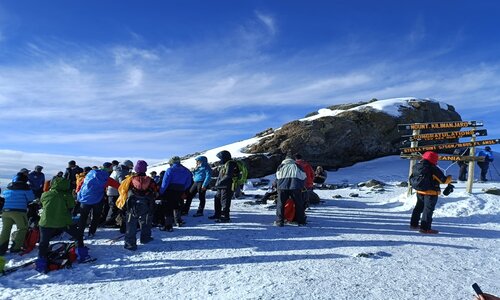
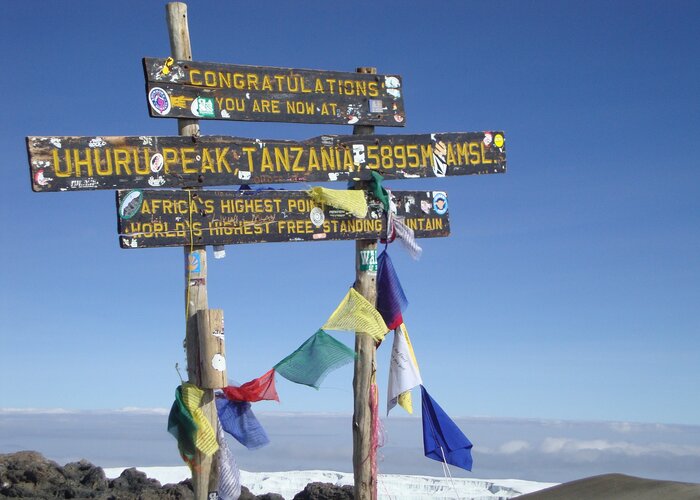
Start your summit bid early enough to reach Uhuru Peak by Fajr or before fasting begins.
Hydrate thoroughly after Iftar and Suhoor to combat dehydration.
🍽️ Meal Planning During Ramadan
If you’re booking with Hike Kilimanjaro, let us know in advance our chefs can accommodate halal meals and adjust your meal schedule to align with Iftar and Suhoor. Private climbs offer more flexibility, but even in a group trek, arrangements can be made for your religious observance.
We’ll prepare:
Warm, energy-rich meals for pre-dawn and post-sunset
Dates, soups, teas, and carb-based foods to sustain energy
Quiet space for breaking the fast and spiritual reflection
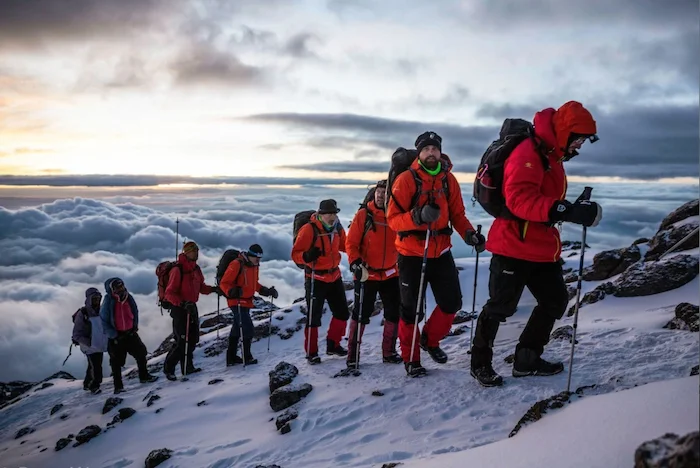
🙏 Prayer on the Mountain
Finding time and space for prayers is very possible during the climb. Our guides are happy to help you:
- Locate suitable spots for Salah
- Align prayer times with your route and rest stops
- Find Qibla direction using a compass or smartphone app
Friday Prayers (Jumu’ah): While the full sermon may not be practical on the trail, individual or small group prayer is possible with guidance.
📅 Best Routes and Timing for Ramadan Climbs
Ramadan changes yearly, so it’s best to check the calendar. Routes like Rongai or Marangu offer shorter durations, while Lemosho or Machame allow for better acclimatization.
Consider:
Trekking before or after the middle 10 days of Ramadan for more energy
Booking early to secure customized support and flexibility
Finishing the climb in time for Eid celebrations in Moshi or Zanzibar
🧕 Solo Muslim Travelers Are Welcome
Whether you’re joining a group or climbing privately, Hike Kilimanjaro ensures cultural respect and inclusive service for Muslim climbers, men and women alike. Female solo trekkers will feel safe and supported with our trained mountain crew and female staff available on request.
✨ Spiritual Journey on the Roof of Africa
For many, climbing Kilimanjaro during Ramadan isn’t just a physical challenge, it’s a spiritual pilgrimage. Standing at 5,895 meters during the holy month offers a rare moment of reflection, strength, and personal growth.
📌 Final Tips for Muslim Trekkers
Inform your tour operator early about fasting and meal needs
Pack energy gels, dates, and prayer items
Choose private treks for flexibility if your budget allows
Mentally preparing for Ramadan on the mountain is unique but demanding
🧭 Ready to Plan Your Ramadan Kilimanjaro Climb?
At Hike Kilimanjaro, we’re committed to supporting your spiritual and trekking goals. Our experienced guides, halal-friendly meals, and personalized support will ensure your climb during Ramadan is safe, respectful, and unforgettable.
📩 Contact us today to plan your customized Ramadan trek.
Share Your Article:
Make your dream trip come true with Hike Kilimanjaro Ltd.

5/5

Based on 200+ reviews
Book Your Discounted Adventure Today!
Customize your dream trip with Hike Kilimanjaro. Explore our Kilimanjaro treks and top Tanzania safari packages, designed for comfort, safety, and unforgettable experiences.
Related posts
These full and frank reviews are from travelers who have traveled with Hike Kilimanjaro previously. The reviews and experiences shown here are from reputable travel websites like TripAdvisor, Google, Facebook, and Trust Pilot, etc.
Posted on Google
 Andreas Conzelmann13 days ago
Trustindex verifies that the original source of the review is Google.
Unvergessliche 8 Tage am Kilimanjaro – Northern Circuit mit Hike Kilimanjaro Wir haben im August 2026 die 8-tägige Northern-Circuit-Route mit Hike Kilimanjaro gemacht – und es war einfach perfekt! Ein riesiges Dankeschön an unser großartiges Team: Richard, Keddy, Innocent und Doc Florian. Die vier waren nicht nur unglaublich professionell und erfahren, sondern auch super sympathisch, aufmerksam und fantastische Motivatoren. Wir haben uns zu jeder Zeit sicher und bestens betreut gefühlt. Die Northern Circuit Route war für uns die perfekte Wahl: landschaftlich unglaublich abwechslungsreich und wunderschön und vor allem deutlich weniger überlaufen als andere Routen. Wir waren an vielen Tagen fast komplett für uns und häufig sogar die einzigen oder fast die einzigen am Camp. Ein wirklich besonderes Erlebnis! Auch die Verpflegung war hervorragend. Godson, unser Koch, hat jeden Tag unglaublich leckeres Essen gezaubert – ehrlich gesagt hätten wir auf dem Berg mit deutlich weniger gerechnet. 😊 Besonders hervorheben möchten wir auch die Träger. Das gesamte Team war unglaublich freundlich, hilfsbereit und herzlich. Man merkt, dass hier Menschen mit Leidenschaft und großem Engagement arbeiten. Von der Organisation über die Sicherheit und Betreuung bis hin zur Stimmung im Team hat einfach alles gepasst. Die Guides hatten immer ein Auge auf uns, haben uns motiviert, wenn es anstrengend wurde, und gleichzeitig dafür gesorgt, dass wir die Reise und die beeindruckende Landschaft genießen konnten. Absolute Empfehlung für Hike Kilimanjaro! Wenn wir den Kilimanjaro noch einmal besteigen würden, würden wir jederzeit wieder mit diesem Team gehen. Asante sana an das gesamte Hike-Kilimanjaro-Team für diese unvergesslichen 8 Tage! 🏔️❤️Posted on Google Shreyas Parbat26 days agoAmazing people and amazing experience! Truly was a delight hiking Kili with Keddy and gang. I’m only alive because of them :)Posted on Google
 Andrea Scharr43 days agoAm 12. August begann unser Kili—Abenteuer zu acht. Mit unseren Guides Richard, Keddy, Innocent und „Doc“ Florian sowie einer 28 Mann Crew von Hike Kilimanjaro starteten wir am Lemosho Gate für die 8-tägige Northern Circuit Route. Und es wurden unvergessliche Tage. Wir waren bestens umsorgt, versorgt und betreut, alles war perfekt organisiert. Jeden Morgen wurden wir mit Tanz und Gesang in den Wandertag verabschiedet und genauso herzlich bei der Ankunft im Camp empfangen. Der Koch Godson zauberte tolle Mahlzeiten und ich bin überzeugt, dass seine göttlichen Suppen und das morgendliche Porrige maßgeblich zum Gipfelerfolg beigetragen haben. Die Route war landschaftlich sehr schön und aufgrund der Länge ideal für die Akklimatisierung in der Höhe. Am Abend gab es medizinische Checks, so dass wir uns immer sicher fühlten. Danke, dass wir für diese Zeit Teil der Hike Kilimanjaro Familie sein durften und Danke für eure Motivation und Herzlichkeit. Wir können den Trip mit euch nur empfehlen, es wurde an alles gedacht, selbst an die abendliche Wärmflasche. On August 12, our Kilimanjaro adventure began with eight of us. Accompanied by our guides Richard, Keddy, Innocent, and “Doc” Florian, as well as a 28-person crew from Hike Kilimanjaro, we set out from Lemosho Gate on the 8-day Northern Circuit route. And those days turned out to be unforgettable. We were well taken care of, well-provided for, and well-supported; everything was perfectly organized. Every morning, we were sent off on our hike with dancing and singing, and welcomed just as warmly upon arrival at camp. The cook, Godson, whipped up fantastic meals, and I’m convinced that his divine soups and the morning porridge played a major role in our success in reaching the summit. The route offered stunning scenery and, due to its length, was ideal for acclimatizing to the altitude. In the evenings, there were medical check-ups, so we always felt safe. Thank you for letting us be part of the Hike Kilimanjaro family during this time, and thank you for your motivation and warmth. We highly recommend this trip with you—every detail was taken care of, even the hot water bottle in the evening.Posted on Tripadvisor
 Navigator5953242042944 days ago
Verified
Kilimanjaro Abenteuer Am 12. August begann unser Kili—Abenteuer zu acht. Mit unseren Guides Richard, Keddy, Innocent und „Doc“ Florian sowie einer 28 Mann Crew von Hike Kilimanjaro starteten wir am Lemosho Gate für die 8-tägige Northern Circuit Route. Und es wurden unvergessliche Tage. Wir waren bestens umsorgt, versorgt und betreut, alles war perfekt organisiert. Jeden Morgen wurden wir mit Tanz und Gesang in den Wandertag verabschiedet und genauso herzlich bei der Ankunft im Camp empfangen. Der Koch Godson zauberte tolle Mahlzeiten und ich bin überzeugt, dass seine göttlichen Suppen und das morgendliche Porrige maßgeblich zum Gipfelerfolg beigetragen haben. Die Route war landschaftlich sehr schön und aufgrund der Länge ideal für die Akklimatisierung in der Höhe. Am Abend gab es medizinische Checks, so dass wir uns immer sicher fühlten. Danke, dass wir für diese Zeit Teil der Hike Kilimanjaro Familie sein durften und Danke für eure Motivation und Herzlichkeit. Wir können den Trip mit euch nur empfehlen, es wurde an alles gedacht, selbst an die abendliche Wärmflasche. On August 12, our Kilimanjaro adventure began with eight of us. Accompanied by our guides Richard, Keddy, Innocent, and “Doc” Florian, as well as a 28-person crew from Hike Kilimanjaro, we set out from Lemosho Gate on the 8-day Northern Circuit route. And those days turned out to be unforgettable. We were well taken care of, well-provided for, and well-supported; everything was perfectly organized. Every morning, we were sent off on our hike with dancing and singing, and welcomed just as warmly upon arrival at camp. The cook, Godson, whipped up fantastic meals, and I’m convinced that his divine soups and the morning porridge played a major role in our success in reaching the summit. The route offered stunning scenery and, due to its length, was ideal for acclimatizing to the altitude. In the evenings, there were medical check-ups, so we always felt safe. Thank you for letting us be part of the Hike Kilimanjaro family during this time, and thank you for your motivation and warmth. We highly recommend this trip with you—every detail was taken care of, even the hot water bottle in the evening.Posted on Tripadvisor Smiling Orka65 days agoTop tier team to help you climb Mount Kilimanjaro. We did the 7 day Lemosho route. We met with Florian and Keddy the day before the hike and they helped us get deeper understanding of the route, conditions and expectations. They also checked our gear to make sure we had everything we needed. For our family of 5, we had 3 guides ( Florian, Keddy and Inno )and 18 other support staff. The whole team was very kind, polite , always happy to help and very professional. They went above and beyond to help us get through the ups and down of the hike. They also did health checks including oxygen levels and looked out for other symptoms each day. They supported us and made sure we had an amazing , once in a lifetime experience reaching the top of Mount Kilimanjaro. The whole team of Hike Kilimanjaro gets 5 stars and they come highly recommended.
Owner's reply
Thank you so much, Smilingorka, for your fantastic 5-star review! We’re truly grateful that you chose Hike Kilimanjaro for such a special adventure with your family. It’s wonderful to hear that Florian, Keddy, Inno, and the entire support team made you feel well prepared, supported, and comfortable throughout your Lemosho trek.Your kind words about our team’s professionalism, care, and attention to your wellbeing mean so much to us. We’re especially happy to know that the pre-trek briefing, gear check, daily support, and guidance helped make your journey to the summit a memorable one.Congratulations again to your whole family on reaching the Roof of Africa! It was a pleasure to be part of your once-in-a-lifetime experience, and we hope to welcome you back to Tanzania for another unforgettable adventure.Asante sana, and thank you for recommending Hike Kilimanjaro!Posted on Tripadvisor Happy traveler66 days agohike kili. Hike kilimanjaro and the team was just fabulous and helpful all the way in creating memories and experiences at kili. they made sure we were comfortable and well fed. guides porters and team worked really hard to make us feel comfortable. i will say they even hold our hands during decent as road were a bit muddy. quite an experience and i will do it again with them.
Owner's reply
Thank you so much, Rupesh, for your wonderful review! We’re delighted to hear that you had such a memorable experience climbing Kilimanjaro with Hike Kilimanjaro. It means a lot to our entire team to know that our guides, porters, and crew helped keep you comfortable, well-fed, and supported throughout the trek.Your kind words about the team’s dedication truly mean a lot to us. We’re especially happy that you felt well cared for every step of the way.Thank you for trusting us with your Kilimanjaro adventure, and we’d be absolutely delighted to welcome you back for another experience with us! Asante sana, Rupesha!Posted on Tripadvisor alexplainlaterr138 days agoHighlight of our trip It's a shame I'm only posting this review now, but we completed the 7-day Lemosho Route trek with Hike Kilimanjaro (formerly Landside Adventures) in October 2025, and it was easily the highlight of our entire trip to Tanzania. From the very beginning, the experience was exceptional. We worked with Maxon during the booking process, and he was always responsive, professional, and easy to work with. Any questions we had were answered promptly, making the planning process smooth and stress-free. The night before our trek, Maxond, as well as our guides, Keddy and Florian, met us at our hotel to review our gear, conduct safety checks, and answer any last-minute questions. Their professionalism immediately gave us confidence that we were in good hands. Throughout the trek, Keddy and Florian were outstanding. They paced us perfectly, constantly checked on our well-being, and made sure we were acclimatizing safely. Their knowledge of the mountain, wildlife, terrain, and altitude-related challenges was impressive, and goes to show the level of knowledge required to be a guide. Beyond being excellent guides, they were also incredibly fun to spend time with. We shared some of the best laughs of our entire trip thanks to them :) One thing that exceeded all expectations was the food. Every meal felt restaurant-quality, and the portions were incredibly generous. A huge thank you to Chef Godson, who consistently delivered delicious meals despite the challenging mountain environment. We were also fortunate to be supported by an amazing porter team: KC, Meschak, Hermann, Geoffrey, Victor, George, and Joseph. KC was incredible, especially during some of the tougher night hikes and on summit night, where his support made a huge difference. Meschak's positive energy was contagious and helped keep spirits high throughout the trek. Hermann's constant smile brightened every day on the mountain. Geoffrey provided exceptional service at camp, always making us feel welcome and cared for. Victor, George, and Joseph were always ready to lend a hand whenever we were moving a little slower or needed extra support. Safety was clearly a top priority for the entire team. Health checks were conducted every evening to monitor our vitals and ensure everyone was acclimatizing properly. This level of care gave us additional peace of mind throughout the climb. Thanks to the excellent guidance, pacing, and support from the entire crew, we successfully reached the summit of Mount Kilimanjaro. Summit night was one of the most challenging experiences we've ever faced, but it was also one of the most rewarding. Standing at the top above the clouds over Africa is a memory we'll never forget. The Lemosho Route treated us to some of the most breathtaking scenery we've ever experienced, and the support from the entire Hike Kilimanjaro team made the journey even more memorable. If you're considering climbing Kilimanjaro, we very much recommend Hike Kilimanjaro (formerly Landside Adventures). Their professionalism, attention to safety, incredible staff, and genuine care for their clients made this an unforgettable adventure and one of the best travel experiences we've ever had.Posted on Tripadvisor
 Hasnain L143 days agoamazing experience The Serengeti and ngorongoro safari experiences were amazing. We visited Serengeti for 2 days and ngorongoro crater for 1 day. The guide, Sule, was very welcoming, kind and experienced. We saw the big 5, a kill as well as a rhino throughout our safari. It is an amazing experience for a very reasonable price. Choose Hike Kilimanjaro definitely for your safari trip.
Owner's reply
Thank you so much for your wonderful review!We are delighted to hear that you had an amazing experience exploring the Serengeti and Ngorongoro Crater with us. It’s fantastic that you were able to see the Big Five, a rhino, and even witness a kill in the wild—truly unforgettable safari moments!We will be sure to pass your kind words on to Sule. He is passionate about sharing Tanzania’s incredible wildlife and ensuring our guests have the best possible experience.Thank you for choosing Hike Kilimanjaro for your adventure and for recommending us to future travelers. We hope to welcome you back to Tanzania for another unforgettable safari or even a Kilimanjaro trek someday!Warm regards,The Hike Kilimanjaro TeamPosted on Google Suhail Lalji143 days agoExcellent tour company with excellent guides. Had an amazing experience with this company when climbing Kilimanjaro and Safari through Ngorongoro and Serengeti national parks. Definitely recommend
Owner's reply
Dear Suhail, Thank you very much for your kind review and recommendation! We are thrilled to hear that you had an amazing experience with us, both on your Kilimanjaro climb and during your safari in Ngorongoro and Serengeti National Parks. Our team works hard to create memorable adventures, so it is incredibly rewarding to know that you enjoyed your journey. Thank you for choosing Hike Kilimanjaro. We truly appreciate your support and hope to welcome you back to Tanzania for another unforgettable adventure in the future! Warm regards, The Hike Kilimanjaro TeamPosted on Tripadvisor Maximilian E154 days agoProfessional Team, Unforgettable Kilimanjaro Climb We completed the 8-day Northern Circuit route on Kilimanjaro, and it was an outstanding experience from start to finish. The entire team was highly professional, experienced, and incredibly well organized throughout the trek. Our guides inspired confidence at every stage — they were knowledgeable, attentive, and clearly very familiar with the mountain, which made us feel safe and well looked after at all times. Communication in advance of the trip was also excellent. Everything was handled clearly and professionally, which made the preparation process very smooth and gave us a good feeling even before the climb started. On the mountain itself, the whole team did a fantastic job and contributed to making this such a special experience. The support, friendliness, and overall organization were truly impressive. All in all, it was a wonderful and unforgettable journey, and we would highly recommend this team to anyone planning to climb Kilimanjaro.
Owner's reply
Dear MaximilianeThank you so much for your wonderful review and for choosing Hike Kilimanjaro for your 8-day Northern Circuit adventure.We are truly delighted to hear that you had such an outstanding experience on Mount Kilimanjaro. Your kind words about our guides, porters, and the entire team mean a great deal to us. Safety, professionalism, and personalized service are very important to us, so it is incredibly rewarding to know that you felt well supported and confident throughout the climb.We are also pleased that the communication and trip preparation process met your expectations from the very beginning. Creating smooth and memorable experiences for our guests is always our goal.Thank you once again for your trust and recommendation. It was an absolute pleasure to be part of your Kilimanjaro journey, and we hope to welcome you back to Tanzania again in the future for another unforgettable adventure.Warm regards,Maxon InnocentHike Kilimanjaro LtdVerified by TrustindexTrustindex verified badge is the Universal Symbol of Trust. Only the greatest companies can get the verified badge who has a review score above 4.5, based on customer reviews over the past 12 months. Read more


Speak to an Expert
Need assistance with your booking? Our friendly Tanzania-based expert team is here to help. Feel free to reach out with any travel-related questions or concerns.

Maxon

- WhatsApp +255 692 406 444