

Climb Kilimanjaro Marangu Route | Day By Day Description
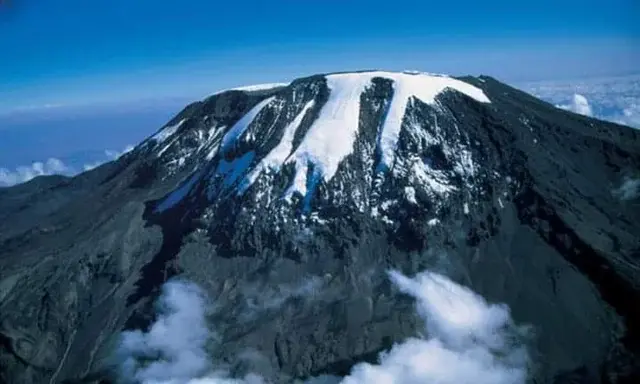
Mount Kilimanjaro is the highest mountain in Africa, standing proudly at 5,895 meters (19,341 feet) above sea level. Every year, thousands of climbers travel to Tanzania to experience the adventure of reaching the Roof of Africa. Among all the available trekking routes, the Marangu Route remains one of the most popular because it combines breathtaking scenery, comfortable mountain huts, and a gradual ascent that makes it attractive to many first-time climbers.
Known worldwide as the “Coca-Cola Route,” the Marangu Route is the only Kilimanjaro trail offering comfortable mountain hut accommodation instead of camping. Climbers sleep in wooden cabins equipped with beds and mattresses, providing additional comfort throughout the journey.
At Hike Kilimanjaro Ltd, we have guided hundreds of successful expeditions on the Marangu Route. Our experienced mountain guides, professional cooks, and dedicated porters ensure every climber enjoys a safe, memorable, and successful journey from the rainforest to Uhuru Peak.
Detailed Route Description
Why Choose the Marangu Route for Your Kilimanjaro Adventure?
The Marangu Route begins on the southeastern side of Mount Kilimanjaro at Marangu Gate, approximately one hour from Moshi Town. Unlike other routes, climbers ascend and descend using the same trail.
Although many travelers believe this is the easiest route, reaching the summit still requires excellent preparation, proper acclimatization, and professional mountain support.
Highlights of the Marangu Route
Here are the Trip Highlights
- Comfortable mountain huts instead of tents
- Well-established trekking trail
- Suitable for beginners with good physical fitness
- Reliable rescue access
- Beautiful rainforest filled with wildlife
- Stunning alpine scenery
- Amazing sunrise from Uhuru Peak
- Professional guiding support throughout the trek
Marangu Route Overview
🏔️ Route Name
Marangu Route
⏱️ Duration
Available as a 5-Day or 6-Day itinerary, with the 6-Day option recommended for better acclimatization.
🥾 Difficulty
Moderate. The trail is non-technical, making it suitable for beginners with good physical fitness, but the high altitude remains the greatest challenge.
📈 Success Rate
The 6-Day itinerary offers a significantly higher summit success rate due to the additional acclimatization day at Horombo Hut.
🏡 Accommodation
Comfortable mountain huts with shared dormitory-style rooms, beds, mattresses, and dining facilities at each overnight stop.
🚩 Starting Gate
Marangu Gate (1,860 m / 6,102 ft), located on the southeastern side of Mount Kilimanjaro.
🏆 Summit
Uhuru Peak (5,895 m / 19,341 ft), the highest point in Africa and the ultimate goal of every Kilimanjaro climber.
⭐ Best For
First-time climbers, families, and trekkers looking for the comfort and convenience of mountain hut accommodation instead of camping.
Although both itineraries follow the same trail, the 6-Day Marangu Route is widely regarded as the better option for most climbers. The additional acclimatization day at Horombo Hut gives your body more time to adjust to the increasing altitude, reducing the risk of altitude sickness and significantly improving your chances of reaching Uhuru Peak.
🫁 Better Acclimatization
The extra day allows your body to adapt naturally to the higher elevation before continuing the ascent.
🏔️ Higher Summit Success
With more time to acclimatize, climbers have a much greater chance of successfully reaching the summit of Mount Kilimanjaro.
❤️ Reduced Risk of Altitude Sickness
A slower ascent helps minimize the effects of high altitude, making the trek safer and more enjoyable.
😊 More Comfortable Trekking Experience
The additional day reduces physical strain, allowing you to enjoy the scenery, rest properly, and prepare for a successful summit attempt.
Detailed Route Description
While some operators offer a five-day Marangu Route, we do not recommend it, as the short itinerary provides insufficient acclimatization, increasing the risk of altitude sickness.
For a safer and more enjoyable experience, we recommend the six-day Marangu itinerary, which allows for gradual ascent and better preparation for the summit. If you have any questions or need guidance on choosing the best itinerary, schedule a call with our team at Hike Kilimanjaro.
Why the 6-Day Marangu Route is Better Than the 5-Day Option
Although the 5-day Marangu Route is the shortest itinerary, it gives the body less time to adjust to increasing altitude. This significantly reduces summit success.
The 6-day Marangu Route includes an additional acclimatization day at Horombo Hut, allowing climbers to adapt naturally before attempting higher elevations.
Benefits include:
- Better acclimatization
- Increased summit success
- Reduced altitude sickness risk
- More time to enjoy the mountain
- Less physical stress
For these reasons, we strongly recommend the 6-Day Marangu Route for anyone seeking the best balance between comfort and summit success.
Day-by-Day Description of the Marangu Route
Day 1: Moshi – Marangu Gate – Mandara Hut
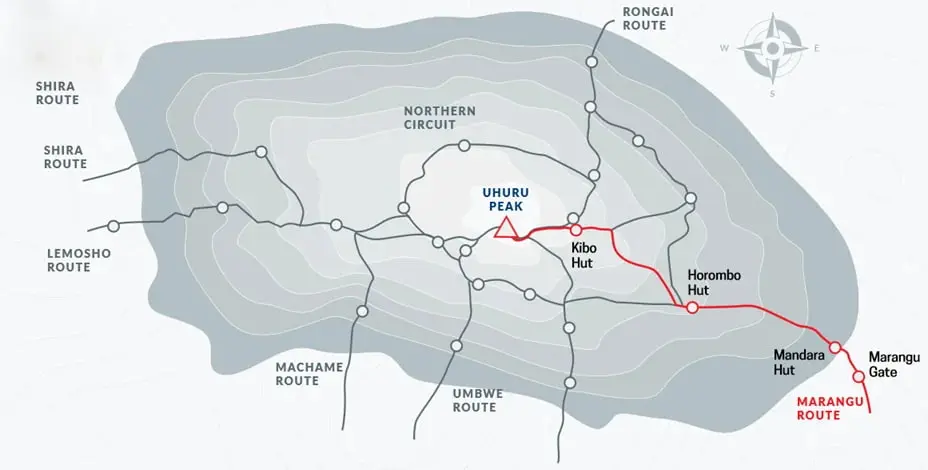
Day 1: Marangu Gate to Mandara Hut
- Elevation: 1,860m to 2,700m
- Distance: 8 km
- Hiking Time: 4–5 Hours
- Your adventure begins after breakfast with a transfer from your hotel to Marangu Gate, where registration with Kilimanjaro National Park authorities takes place.
- The trail immediately enters the lush tropical rainforest, one of the most beautiful ecosystems on Mount Kilimanjaro. Giant fig trees, towering eucalyptus, colorful wildflowers, and hanging moss create an unforgettable atmosphere.
- Along the way, climbers frequently encounter:
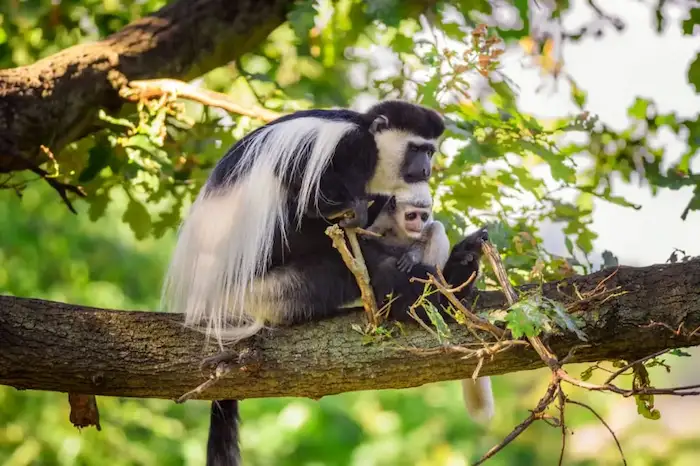
- Black-and-white Colobus monkeys
- Blue monkeys
- Exotic birds
- Colorful butterflies
- Tropical plant species
- After several hours of gentle hiking, you arrive at Mandara Hut, located beneath the forest canopy.
- After lunch, there is an optional short walk to Maundi Crater, where spectacular panoramic views stretch across northern Tanzania and neighboring Kenya.
- Dinner and overnight stay at Mandara Hut.
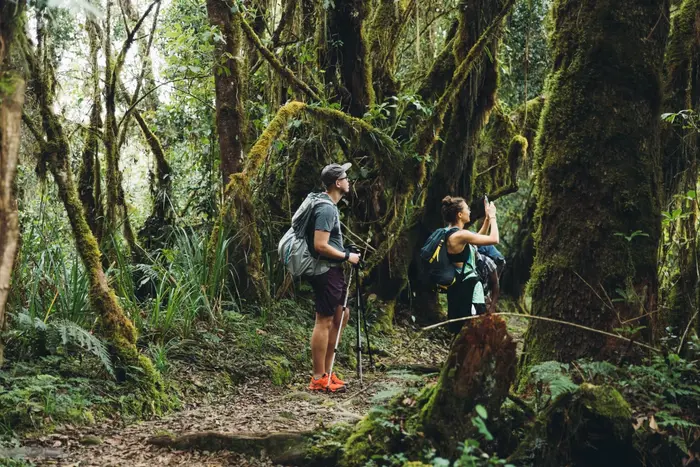
Day 2: Mandara Hut – Horombo Hut
- Elevation: 2,700m to 3,720m
- Distance: 12 km
- Hiking Time: 6–7 Hours
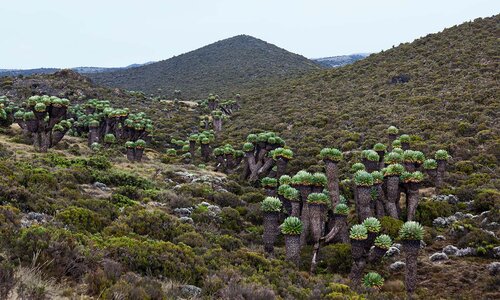
Leaving the rainforest behind, the trail gradually enters the spectacular heath and moorland zone.
The landscape changes dramatically.
Dense forests give way to giant groundsels, everlasting flowers, and open alpine plains.
As the altitude increases, magnificent views begin to appear.
On clear days you can admire:
- Mawenzi Peak
- Kibo Peak
- Endless alpine valleys
- Volcanic landscapes
The fresh mountain air and changing scenery make this one of the most enjoyable trekking days.
By afternoon, you arrive at Horombo Hut, your home for the next night.
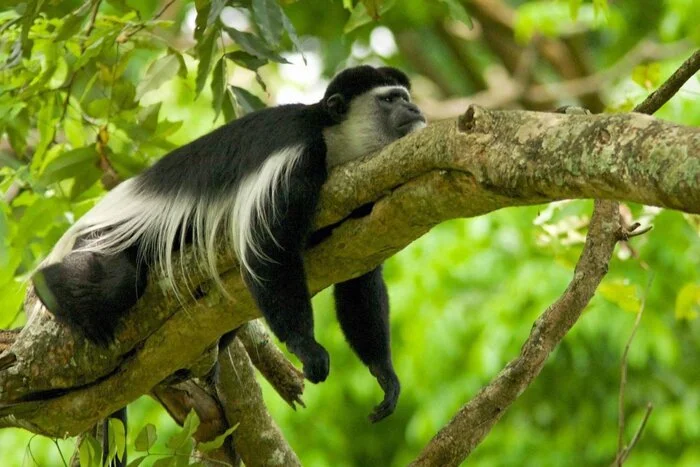
Day 3: Acclimatization Day at Horombo Hut (6-Day Route)
Elevation: 3,720m
This important acclimatization day greatly improves your chances of reaching the summit.
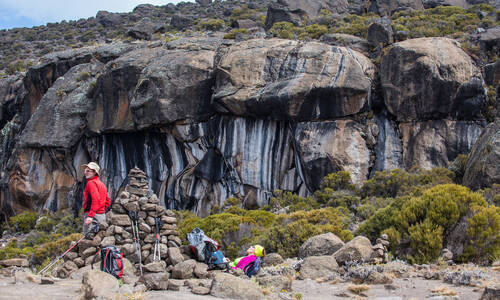
Rather than remaining inactive, climbers take a short hike toward Zebra Rocks, reaching approximately 4,000 meters before returning to Horombo Hut.
This follows the proven mountaineering principle:
“Climb high, sleep low.”
The additional day allows your body to produce more red blood cells, improving oxygen transport while reducing the likelihood of Acute Mountain Sickness (AMS).
The afternoon is spent resting, hydrating, and preparing mentally for the higher elevations ahead.
Dinner and overnight at Horombo Hut.
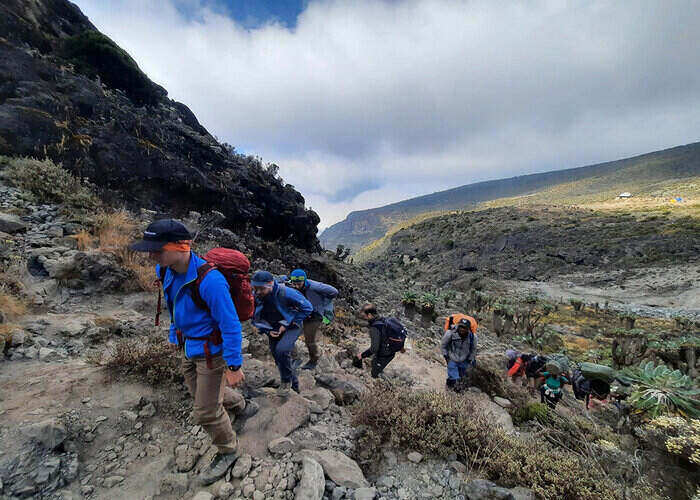
Day 4: Horombo Hut – Kibo Hut
- Elevation: 3,720m to 4,700m
- Distance: 10 km
- Hiking Time: 6–7 Hours
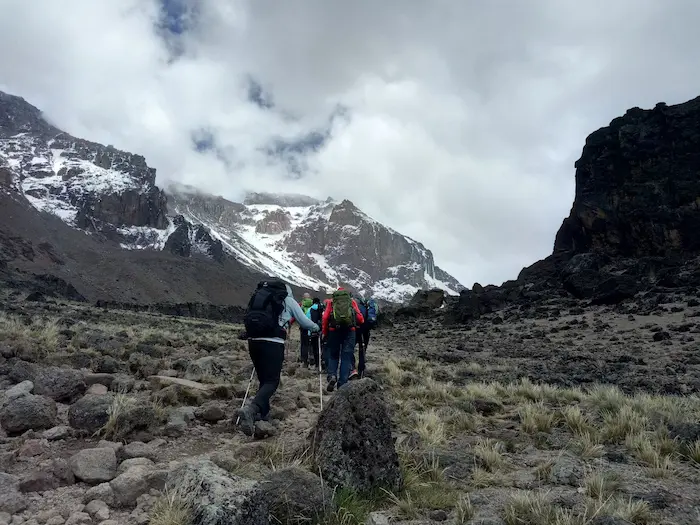
Today’s trek crosses the dramatic Alpine Desert, a harsh but fascinating environment shaped by volcanic activity.
Vegetation becomes increasingly scarce as temperatures fluctuate dramatically between warm daytime conditions and freezing nights.
The trail traverses the famous Saddle, a vast plateau lying between Mawenzi and Kibo Peaks.
This barren landscape feels almost lunar, offering incredible photographic opportunities.
Upon arrival at Kibo Hut, climbers enjoy an early dinner before resting for several hours in preparation for the midnight summit attempt.
Only light snacks and hydration are recommended before sleep.
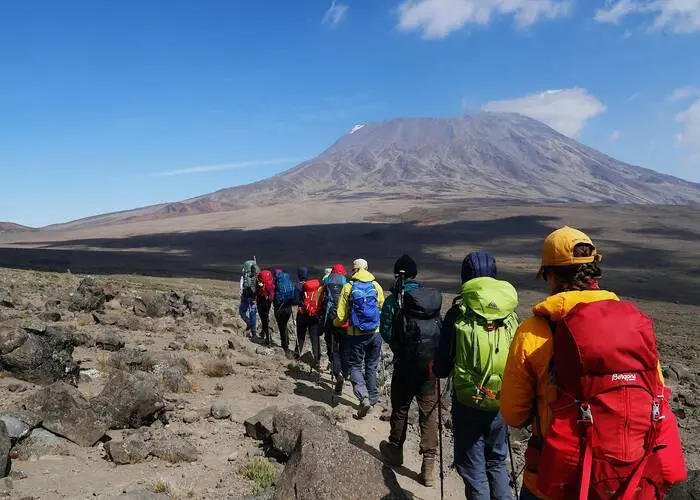
Day 5: Kibo Hut – Gilman's Point – Uhuru Peak – Horombo Hut
- Elevation: 4,700m to 5,895m then down to 3,720m
- Distance: 22 km
- Hiking Time: 11–15 Hours
This is the most challenging and rewarding day of the entire expedition.
Around midnight, climbers begin the final ascent under a sky filled with brilliant stars.
Using headlamps, the slow but steady climb continues toward Gilman’s Point (5,685m).
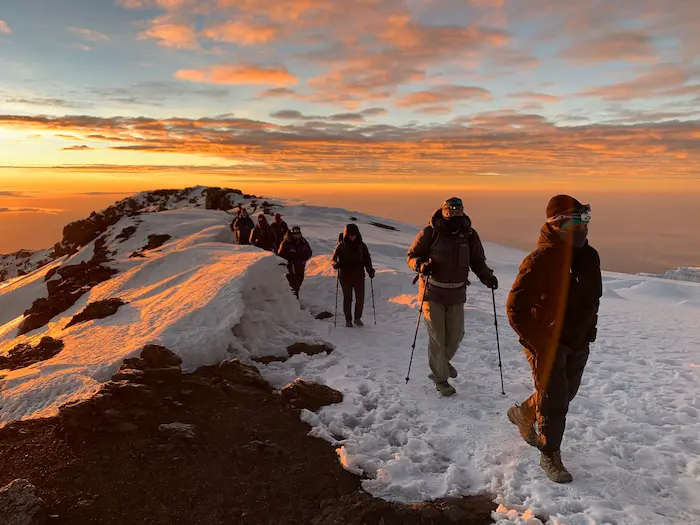
As dawn approaches, the first rays of sunlight illuminate glaciers, volcanic craters, and the surrounding African plains.
After a brief rest, the journey continues along the crater rim toward Uhuru Peak, the highest point in Africa.
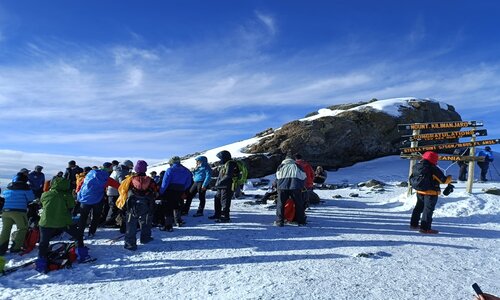
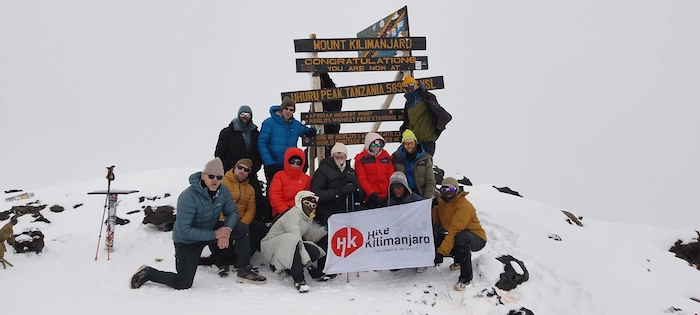
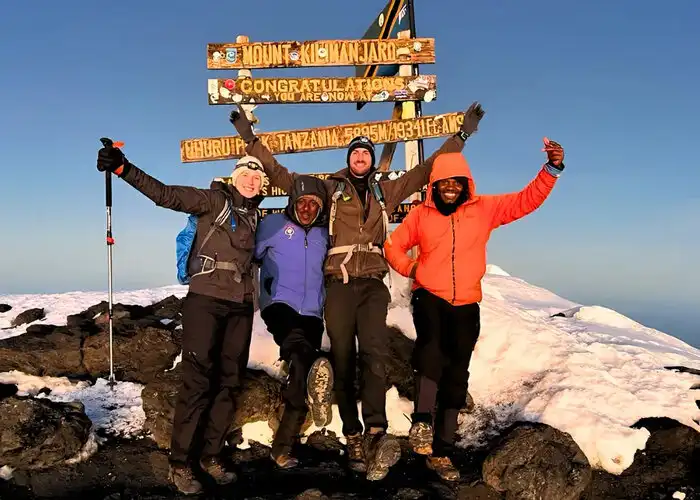
Standing beneath the famous summit sign at 5,895 meters is an unforgettable achievement and the reward for days of determination and perseverance.
After photographs and celebration, climbers begin their descent back to Kibo Hut for a short rest before continuing to Horombo Hut for the night.
Day 6: Horombo Hut – Marangu Gate
- Elevation: 3,720m to 1,860m
- Distance: 20 km
- Hiking Time: 5–7 Hours
The final descent passes once again through the beautiful rainforest.
The warmer temperatures and rich vegetation provide a fitting conclusion to the adventure.
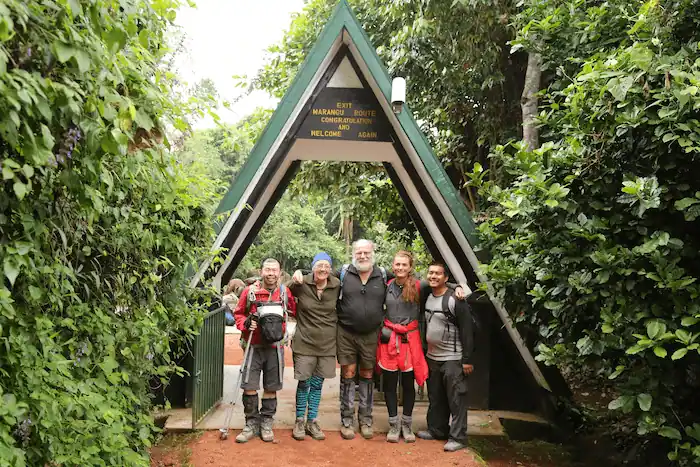
Upon reaching Marangu Gate, successful climbers receive their official Kilimanjaro Summit Certificates.
Your driver will then transfer you back to your hotel for a well-deserved shower and celebration.
What Is the Difficulty Level of the Marangu Route?
The Marangu Route is generally considered one of the most accessible routes on Mount Kilimanjaro, making it a popular choice for beginners and trekkers who prefer hut accommodation over camping. However, climbing Africa’s highest mountain is still a physically demanding challenge that requires determination, preparation, and a positive mindset.
The trail itself is well-maintained and less technical than some of the other Kilimanjaro routes. There is no rock scrambling or climbing with ropes, but the high altitude presents the greatest obstacle. As you ascend, the oxygen level decreases significantly, making each step more demanding.
To maximize your chances of reaching the summit, it is essential to maintain a slow and steady pace, stay hydrated, eat well, and follow your guide’s instructions. At Hike Kilimanjaro Ltd, our experienced mountain guides monitor every climber closely, conduct daily health checks, and adjust the pace to suit the group’s acclimatization
Marangu Route Success Rate
Reaching the summit of Mount Kilimanjaro and Uhuru Peak (5,895 m / 19,341 ft) depends greatly on proper acclimatization. Spending more days on the mountain allows your body to gradually adjust to the changing altitude, improving your comfort, safety, and overall chances of reaching the highest point in Africa.
🥾 5-Day Marangu Route
The 5-Day Marangu Route is the shortest option available on this trail and is suitable for climbers who have previous high-altitude trekking experience or limited time. However, the faster ascent provides less opportunity for your body to adjust to the altitude, which can increase the chances of experiencing altitude-related challenges.
Although it follows the same scenic trail as the longer itinerary, the reduced acclimatization time means that summit success rates are generally lower compared to the 6-day option.
🏔️ 6-Day Marangu Route
The 6-Day Marangu Route is the recommended choice for most climbers because it includes an important acclimatization day at Horombo Hut (3,720 m). This additional day allows your body to adapt naturally to the higher elevation before continuing toward Kibo Hut and the final summit attempt.
The slower pace improves comfort, reduces the risk of altitude sickness, and gives climbers a much better chance of successfully reaching Uhuru Peak, the highest point on Mount Kilimanjaro.
⭐ Our Recommendation
At Hike Kilimanjaro Ltd, we recommend the 6-Day Marangu Route for climbers who want the best balance between comfort, safety, and summit success. The extra acclimatization day at Horombo Hut allows your body to adjust gradually while giving you more time to enjoy the incredible landscapes of Mount Kilimanjaro.
With a summit success rate of approximately 75–85%, the 6-day itinerary provides a safer and more enjoyable experience compared to the shorter 5-day option. If your dream is to stand on the summit of Africa, the 6-Day Marangu Route is the better choice.
Altitude and Acclimatization on the Marangu Route
Altitude sickness can affect anyone, regardless of age or fitness level. The key to a successful climb is proper acclimatization.
Our guides follow internationally recognized acclimatization practices by encouraging climbers to:
- Walk slowly (“Pole Pole”)
- Drink 3–4 liters of water daily
- Eat nutritious meals
- Take regular rest breaks
- Report any symptoms immediately
- Follow the guide’s pace at all times
Daily health checks include monitoring oxygen saturation levels and heart rate using a pulse oximeter. If necessary, our guides make informed decisions to ensure the safety of every climber.
What Accommodation Is Available on the Marangu Route?
One of the main advantages of climbing Mount Kilimanjaro via the Marangu Route is the availability of comfortable mountain hut accommodation. Unlike other Kilimanjaro routes where climbers sleep in tents, the Marangu Route offers permanent wooden huts with shared dormitory-style rooms throughout the trek.
The mountain huts provide a more comfortable experience, especially for first-time climbers who prefer not to camp. Each hut is equipped with basic sleeping facilities, including bunk beds and mattresses, as well as dining areas where climbers enjoy freshly prepared meals while surrounded by the incredible scenery of Mount Kilimanjaro.
Although the huts provide shelter and sleeping arrangements, nights on Kilimanjaro can be extremely cold, particularly at higher elevations. Climbers should still carry a warm sleeping bag suitable for temperatures below freezing to ensure a comfortable night’s rest.
🌿 Mandara Hut (2,700 m / 8,858 ft)
Mandara Hut is the first overnight stop on the Marangu Route and is located within the beautiful rainforest zone of Mount Kilimanjaro. After hiking through the lush tropical forest, climbers arrive at this peaceful mountain shelter surrounded by unique vegetation and the sounds of nature.
The hut area offers comfortable bunk beds, mattresses, and dining facilities where trekkers can relax, enjoy meals, and recover after the first day of climbing.
🏔️ Horombo Hut (3,720 m / 12,205 ft)
Horombo Hut is the largest and one of the most important accommodation areas on the Marangu Route. Located in the spectacular heath and moorland zone, it offers breathtaking views of Mawenzi Peak, Kibo Peak, and the surrounding alpine landscape.
On the recommended 6-Day Marangu Route itinerary, climbers spend an extra night here for acclimatization. This additional day allows the body to adjust to the altitude before continuing toward the summit area.
🌋 Kibo Hut (4,700 m / 15,420 ft)
Kibo Hut is the final overnight stop before the summit attempt and is located in the harsh but fascinating alpine desert zone between Kibo and Mawenzi Peaks.
Climbers arrive here after crossing the famous Saddle and rest for several hours before beginning the final ascent to Uhuru Peak. Around midnight, the summit journey begins toward Gilman’s Point, the crater rim, and finally the highest point in Africa.
🎒 Important Accommodation Information
While the Marangu Route huts provide beds and mattresses, they are simple mountain shelters and do not offer heating. Temperatures at higher elevations can drop below freezing, especially at Kibo Hut before the summit attempt.
For maximum comfort and warmth, every climber should bring or rent a good-quality sleeping bag designed for cold weather conditions. Proper preparation will help you rest better and conserve energy for the next day’s climb.
Best Time to Climb the Marangu Route
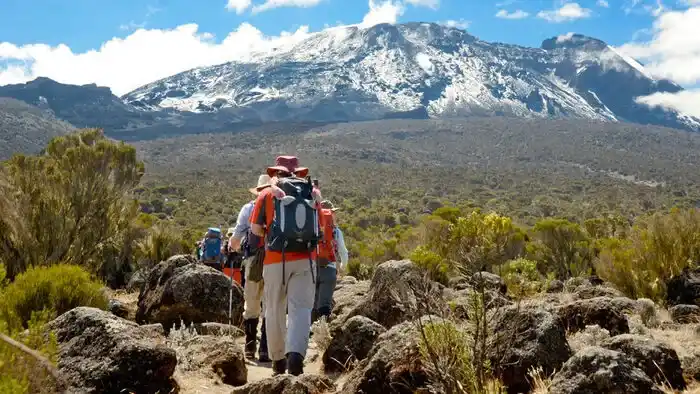
Mount Kilimanjaro is open for climbing throughout the year, but weather conditions change significantly between seasons. Choosing the best time to climb the Marangu Route can make a big difference in your overall experience, affecting trail conditions, visibility, temperature, and your chances of reaching Uhuru Peak (5,895 m / 19,341 ft).
The most recommended climbing periods are during the dry seasons when the weather is more stable, the trails are easier to navigate, and the views from the mountain are usually at their best. However, each season offers a unique experience depending on your preferences.
☀️ January to March – Quiet Trails and Cooler Conditions
The months between January and March are among the best times to climb the Marangu Route, especially for trekkers who prefer fewer crowds and a more peaceful mountain experience. During this period, temperatures are cooler, the trails are less busy, and climbers may have the opportunity to see snow around the summit area.
Clear mornings are common during this season, offering beautiful views of Mount Kilimanjaro’s glaciers, volcanic landscapes, and surrounding areas. It is an excellent choice for travelers looking for a quieter alternative to the busy peak season.
Advantages:
- Fewer climbers on the trail
- Peaceful and less crowded trekking experience
- Possible snow-covered summit views
- Clear morning mountain scenery
- Comfortable temperatures for hiking
🏔️ June to October – The Most Popular Climbing Season
The period from June to October is the most popular time to climb Mount Kilimanjaro because of its stable weather conditions and excellent visibility. These months attract many first-time climbers, photographers, and adventure travelers because the chances of experiencing dry trails and clear skies are much higher.
The cooler and drier conditions make the trek more comfortable, while the spectacular views from higher elevations create unforgettable moments throughout the climb.
Advantages:
- Dry and stable weather conditions
- Excellent visibility for photography
- Clear views of Kibo Peak and Mawenzi Peak
- More comfortable hiking conditions
- Higher chances of successful summit attempts
🌧️ November and April to May – Rainy Season Climbing
The months of November and April to May are considered the rainy seasons in Tanzania. During these periods, rainfall can make parts of the Marangu Route wetter, muddy, and more challenging, particularly in the rainforest section of the mountain.
Although climbing Kilimanjaro is possible during the rainy season, fewer visitors choose these months because weather conditions can be less predictable. However, experienced trekkers who are well-prepared can still enjoy a beautiful and quieter climb.
Travelers who choose these months should be prepared with proper waterproof clothing, suitable hiking boots, and flexible expectations regarding weather conditions.
⭐ Our Recommendation
At Hike Kilimanjaro Ltd, we recommend climbing the Marangu Route during the dry seasons, particularly from June to October and January to March. These periods offer the best balance of favorable weather, comfortable trekking conditions, clear views, and increased summit success opportunities.
However, Mount Kilimanjaro is a year-round destination, and every season has its own special atmosphere. Our experienced mountain team can help you choose the best climbing period based on your travel dates, experience level, and personal preferences.
Wildlife Along the Marangu Route
The lower slopes of Kilimanjaro are home to a rich variety of wildlife. During the first and last days of the trek, climbers may encounter:
- Black-and-white Colobus monkeys
- Blue monkeys
- Bush babies
- Tree hyrax
- Colorful turacos
- Hornbills
- Sunbirds
- Numerous butterfly species
As the altitude increases, wildlife becomes less common, giving way to unique alpine vegetation and volcanic landscapes.
What to Pack for the Marangu Route
Proper equipment plays a major role in ensuring a safe, comfortable, and successful climb. Below is a recommended packing list for your Marangu Route trek.
Essential Clothing
- Waterproof jacket
- Waterproof trousers
- Insulated down jacket
- Fleece layers
- Thermal base layers
- Warm gloves
- Warm hat
- Sun hat
- Moisture-wicking hiking shirts
- Hiking trousers
Footwear
- Waterproof hiking boots
- Camp shoes
- Wool hiking socks
- Gaiters (optional)
Gear
- Warm sleeping bag
- Daypack
- Duffel bag
- Trekking poles
- Headlamp with spare batteries
- Water bottles or hydration bladder
- Sunglasses
- Sunscreen
- Lip balm
- Personal medications
At Hike Kilimanjaro Ltd, we also offer high-quality rental equipment for climbers who prefer not to travel with bulky gear, ensuring you have everything you need for a comfortable and enjoyable trek.
Meals During the Trek
Maintaining energy at high altitude requires nutritious meals prepared by experienced mountain cooks.
Our menu typically includes: Fresh fruits, Vegetable soups, Chicken, Beef, Fish, Rice, Pasta, Potatoes, Fresh vegetables, Eggs, Bread, Tea, Coffee, Hot chocolate. We also cater to vegetarian, vegan, gluten-free, and other special dietary requirements when informed in advance.
Safety on the Marangu Route
Your safety is our highest priority. Every climb with Hike Kilimanjaro Ltd includes comprehensive safety measures, including:
- Wilderness First Responder (WFR) certified guides
- Daily medical assessments
- Pulse oximeter monitoring
- Emergency oxygen cylinder
- Comprehensive first aid kit
- Emergency evacuation procedures
- Close communication with Kilimanjaro National Park rescue services
These safety standards help ensure that every climber has the best possible support throughout the expedition.
👉 Get your custom itinerary and best price today: Contact Us
👉 Prefer instant replies? Chat on WhatsApp
Share Your Article:
Make your dream trip come true with Hike Kilimanjaro Ltd.

5/5

Based on 200+ reviews
Book Your Discounted Adventure Today!
Customize your dream trip with Hike Kilimanjaro. Explore our Kilimanjaro treks and top Tanzania safari packages, designed for comfort, safety, and unforgettable experiences.
Related posts
These full and frank reviews are from travelers who have traveled with Hike Kilimanjaro previously. The reviews and experiences shown here are from reputable travel websites like TripAdvisor, Google, Facebook, and Trust Pilot, etc.
Posted on Google
 Andreas Conzelmann9 days ago
Trustindex verifies that the original source of the review is Google.
Unvergessliche 8 Tage am Kilimanjaro – Northern Circuit mit Hike Kilimanjaro Wir haben im August 2026 die 8-tägige Northern-Circuit-Route mit Hike Kilimanjaro gemacht – und es war einfach perfekt! Ein riesiges Dankeschön an unser großartiges Team: Richard, Keddy, Innocent und Doc Florian. Die vier waren nicht nur unglaublich professionell und erfahren, sondern auch super sympathisch, aufmerksam und fantastische Motivatoren. Wir haben uns zu jeder Zeit sicher und bestens betreut gefühlt. Die Northern Circuit Route war für uns die perfekte Wahl: landschaftlich unglaublich abwechslungsreich und wunderschön und vor allem deutlich weniger überlaufen als andere Routen. Wir waren an vielen Tagen fast komplett für uns und häufig sogar die einzigen oder fast die einzigen am Camp. Ein wirklich besonderes Erlebnis! Auch die Verpflegung war hervorragend. Godson, unser Koch, hat jeden Tag unglaublich leckeres Essen gezaubert – ehrlich gesagt hätten wir auf dem Berg mit deutlich weniger gerechnet. 😊 Besonders hervorheben möchten wir auch die Träger. Das gesamte Team war unglaublich freundlich, hilfsbereit und herzlich. Man merkt, dass hier Menschen mit Leidenschaft und großem Engagement arbeiten. Von der Organisation über die Sicherheit und Betreuung bis hin zur Stimmung im Team hat einfach alles gepasst. Die Guides hatten immer ein Auge auf uns, haben uns motiviert, wenn es anstrengend wurde, und gleichzeitig dafür gesorgt, dass wir die Reise und die beeindruckende Landschaft genießen konnten. Absolute Empfehlung für Hike Kilimanjaro! Wenn wir den Kilimanjaro noch einmal besteigen würden, würden wir jederzeit wieder mit diesem Team gehen. Asante sana an das gesamte Hike-Kilimanjaro-Team für diese unvergesslichen 8 Tage! 🏔️❤️Posted on Google Shreyas Parbat22 days agoAmazing people and amazing experience! Truly was a delight hiking Kili with Keddy and gang. I’m only alive because of them :)Posted on Google
 Andrea Scharr39 days agoAm 12. August begann unser Kili—Abenteuer zu acht. Mit unseren Guides Richard, Keddy, Innocent und „Doc“ Florian sowie einer 28 Mann Crew von Hike Kilimanjaro starteten wir am Lemosho Gate für die 8-tägige Northern Circuit Route. Und es wurden unvergessliche Tage. Wir waren bestens umsorgt, versorgt und betreut, alles war perfekt organisiert. Jeden Morgen wurden wir mit Tanz und Gesang in den Wandertag verabschiedet und genauso herzlich bei der Ankunft im Camp empfangen. Der Koch Godson zauberte tolle Mahlzeiten und ich bin überzeugt, dass seine göttlichen Suppen und das morgendliche Porrige maßgeblich zum Gipfelerfolg beigetragen haben. Die Route war landschaftlich sehr schön und aufgrund der Länge ideal für die Akklimatisierung in der Höhe. Am Abend gab es medizinische Checks, so dass wir uns immer sicher fühlten. Danke, dass wir für diese Zeit Teil der Hike Kilimanjaro Familie sein durften und Danke für eure Motivation und Herzlichkeit. Wir können den Trip mit euch nur empfehlen, es wurde an alles gedacht, selbst an die abendliche Wärmflasche. On August 12, our Kilimanjaro adventure began with eight of us. Accompanied by our guides Richard, Keddy, Innocent, and “Doc” Florian, as well as a 28-person crew from Hike Kilimanjaro, we set out from Lemosho Gate on the 8-day Northern Circuit route. And those days turned out to be unforgettable. We were well taken care of, well-provided for, and well-supported; everything was perfectly organized. Every morning, we were sent off on our hike with dancing and singing, and welcomed just as warmly upon arrival at camp. The cook, Godson, whipped up fantastic meals, and I’m convinced that his divine soups and the morning porridge played a major role in our success in reaching the summit. The route offered stunning scenery and, due to its length, was ideal for acclimatizing to the altitude. In the evenings, there were medical check-ups, so we always felt safe. Thank you for letting us be part of the Hike Kilimanjaro family during this time, and thank you for your motivation and warmth. We highly recommend this trip with you—every detail was taken care of, even the hot water bottle in the evening.Posted on Tripadvisor
 Navigator5953242042940 days ago
Verified
Kilimanjaro Abenteuer Am 12. August begann unser Kili—Abenteuer zu acht. Mit unseren Guides Richard, Keddy, Innocent und „Doc“ Florian sowie einer 28 Mann Crew von Hike Kilimanjaro starteten wir am Lemosho Gate für die 8-tägige Northern Circuit Route. Und es wurden unvergessliche Tage. Wir waren bestens umsorgt, versorgt und betreut, alles war perfekt organisiert. Jeden Morgen wurden wir mit Tanz und Gesang in den Wandertag verabschiedet und genauso herzlich bei der Ankunft im Camp empfangen. Der Koch Godson zauberte tolle Mahlzeiten und ich bin überzeugt, dass seine göttlichen Suppen und das morgendliche Porrige maßgeblich zum Gipfelerfolg beigetragen haben. Die Route war landschaftlich sehr schön und aufgrund der Länge ideal für die Akklimatisierung in der Höhe. Am Abend gab es medizinische Checks, so dass wir uns immer sicher fühlten. Danke, dass wir für diese Zeit Teil der Hike Kilimanjaro Familie sein durften und Danke für eure Motivation und Herzlichkeit. Wir können den Trip mit euch nur empfehlen, es wurde an alles gedacht, selbst an die abendliche Wärmflasche. On August 12, our Kilimanjaro adventure began with eight of us. Accompanied by our guides Richard, Keddy, Innocent, and “Doc” Florian, as well as a 28-person crew from Hike Kilimanjaro, we set out from Lemosho Gate on the 8-day Northern Circuit route. And those days turned out to be unforgettable. We were well taken care of, well-provided for, and well-supported; everything was perfectly organized. Every morning, we were sent off on our hike with dancing and singing, and welcomed just as warmly upon arrival at camp. The cook, Godson, whipped up fantastic meals, and I’m convinced that his divine soups and the morning porridge played a major role in our success in reaching the summit. The route offered stunning scenery and, due to its length, was ideal for acclimatizing to the altitude. In the evenings, there were medical check-ups, so we always felt safe. Thank you for letting us be part of the Hike Kilimanjaro family during this time, and thank you for your motivation and warmth. We highly recommend this trip with you—every detail was taken care of, even the hot water bottle in the evening.Posted on Tripadvisor Smiling Orka61 days agoTop tier team to help you climb Mount Kilimanjaro. We did the 7 day Lemosho route. We met with Florian and Keddy the day before the hike and they helped us get deeper understanding of the route, conditions and expectations. They also checked our gear to make sure we had everything we needed. For our family of 5, we had 3 guides ( Florian, Keddy and Inno )and 18 other support staff. The whole team was very kind, polite , always happy to help and very professional. They went above and beyond to help us get through the ups and down of the hike. They also did health checks including oxygen levels and looked out for other symptoms each day. They supported us and made sure we had an amazing , once in a lifetime experience reaching the top of Mount Kilimanjaro. The whole team of Hike Kilimanjaro gets 5 stars and they come highly recommended.
Owner's reply
Thank you so much, Smilingorka, for your fantastic 5-star review! We’re truly grateful that you chose Hike Kilimanjaro for such a special adventure with your family. It’s wonderful to hear that Florian, Keddy, Inno, and the entire support team made you feel well prepared, supported, and comfortable throughout your Lemosho trek.Your kind words about our team’s professionalism, care, and attention to your wellbeing mean so much to us. We’re especially happy to know that the pre-trek briefing, gear check, daily support, and guidance helped make your journey to the summit a memorable one.Congratulations again to your whole family on reaching the Roof of Africa! It was a pleasure to be part of your once-in-a-lifetime experience, and we hope to welcome you back to Tanzania for another unforgettable adventure.Asante sana, and thank you for recommending Hike Kilimanjaro!Posted on Tripadvisor Happy traveler62 days agohike kili. Hike kilimanjaro and the team was just fabulous and helpful all the way in creating memories and experiences at kili. they made sure we were comfortable and well fed. guides porters and team worked really hard to make us feel comfortable. i will say they even hold our hands during decent as road were a bit muddy. quite an experience and i will do it again with them.
Owner's reply
Thank you so much, Rupesh, for your wonderful review! We’re delighted to hear that you had such a memorable experience climbing Kilimanjaro with Hike Kilimanjaro. It means a lot to our entire team to know that our guides, porters, and crew helped keep you comfortable, well-fed, and supported throughout the trek.Your kind words about the team’s dedication truly mean a lot to us. We’re especially happy that you felt well cared for every step of the way.Thank you for trusting us with your Kilimanjaro adventure, and we’d be absolutely delighted to welcome you back for another experience with us! Asante sana, Rupesha!Posted on Tripadvisor alexplainlaterr134 days agoHighlight of our trip It's a shame I'm only posting this review now, but we completed the 7-day Lemosho Route trek with Hike Kilimanjaro (formerly Landside Adventures) in October 2025, and it was easily the highlight of our entire trip to Tanzania. From the very beginning, the experience was exceptional. We worked with Maxon during the booking process, and he was always responsive, professional, and easy to work with. Any questions we had were answered promptly, making the planning process smooth and stress-free. The night before our trek, Maxond, as well as our guides, Keddy and Florian, met us at our hotel to review our gear, conduct safety checks, and answer any last-minute questions. Their professionalism immediately gave us confidence that we were in good hands. Throughout the trek, Keddy and Florian were outstanding. They paced us perfectly, constantly checked on our well-being, and made sure we were acclimatizing safely. Their knowledge of the mountain, wildlife, terrain, and altitude-related challenges was impressive, and goes to show the level of knowledge required to be a guide. Beyond being excellent guides, they were also incredibly fun to spend time with. We shared some of the best laughs of our entire trip thanks to them :) One thing that exceeded all expectations was the food. Every meal felt restaurant-quality, and the portions were incredibly generous. A huge thank you to Chef Godson, who consistently delivered delicious meals despite the challenging mountain environment. We were also fortunate to be supported by an amazing porter team: KC, Meschak, Hermann, Geoffrey, Victor, George, and Joseph. KC was incredible, especially during some of the tougher night hikes and on summit night, where his support made a huge difference. Meschak's positive energy was contagious and helped keep spirits high throughout the trek. Hermann's constant smile brightened every day on the mountain. Geoffrey provided exceptional service at camp, always making us feel welcome and cared for. Victor, George, and Joseph were always ready to lend a hand whenever we were moving a little slower or needed extra support. Safety was clearly a top priority for the entire team. Health checks were conducted every evening to monitor our vitals and ensure everyone was acclimatizing properly. This level of care gave us additional peace of mind throughout the climb. Thanks to the excellent guidance, pacing, and support from the entire crew, we successfully reached the summit of Mount Kilimanjaro. Summit night was one of the most challenging experiences we've ever faced, but it was also one of the most rewarding. Standing at the top above the clouds over Africa is a memory we'll never forget. The Lemosho Route treated us to some of the most breathtaking scenery we've ever experienced, and the support from the entire Hike Kilimanjaro team made the journey even more memorable. If you're considering climbing Kilimanjaro, we very much recommend Hike Kilimanjaro (formerly Landside Adventures). Their professionalism, attention to safety, incredible staff, and genuine care for their clients made this an unforgettable adventure and one of the best travel experiences we've ever had.Posted on Tripadvisor
 Hasnain L139 days agoamazing experience The Serengeti and ngorongoro safari experiences were amazing. We visited Serengeti for 2 days and ngorongoro crater for 1 day. The guide, Sule, was very welcoming, kind and experienced. We saw the big 5, a kill as well as a rhino throughout our safari. It is an amazing experience for a very reasonable price. Choose Hike Kilimanjaro definitely for your safari trip.
Owner's reply
Thank you so much for your wonderful review!We are delighted to hear that you had an amazing experience exploring the Serengeti and Ngorongoro Crater with us. It’s fantastic that you were able to see the Big Five, a rhino, and even witness a kill in the wild—truly unforgettable safari moments!We will be sure to pass your kind words on to Sule. He is passionate about sharing Tanzania’s incredible wildlife and ensuring our guests have the best possible experience.Thank you for choosing Hike Kilimanjaro for your adventure and for recommending us to future travelers. We hope to welcome you back to Tanzania for another unforgettable safari or even a Kilimanjaro trek someday!Warm regards,The Hike Kilimanjaro TeamPosted on Google Suhail Lalji139 days agoExcellent tour company with excellent guides. Had an amazing experience with this company when climbing Kilimanjaro and Safari through Ngorongoro and Serengeti national parks. Definitely recommend
Owner's reply
Dear Suhail, Thank you very much for your kind review and recommendation! We are thrilled to hear that you had an amazing experience with us, both on your Kilimanjaro climb and during your safari in Ngorongoro and Serengeti National Parks. Our team works hard to create memorable adventures, so it is incredibly rewarding to know that you enjoyed your journey. Thank you for choosing Hike Kilimanjaro. We truly appreciate your support and hope to welcome you back to Tanzania for another unforgettable adventure in the future! Warm regards, The Hike Kilimanjaro TeamPosted on Tripadvisor Maximilian E150 days agoProfessional Team, Unforgettable Kilimanjaro Climb We completed the 8-day Northern Circuit route on Kilimanjaro, and it was an outstanding experience from start to finish. The entire team was highly professional, experienced, and incredibly well organized throughout the trek. Our guides inspired confidence at every stage — they were knowledgeable, attentive, and clearly very familiar with the mountain, which made us feel safe and well looked after at all times. Communication in advance of the trip was also excellent. Everything was handled clearly and professionally, which made the preparation process very smooth and gave us a good feeling even before the climb started. On the mountain itself, the whole team did a fantastic job and contributed to making this such a special experience. The support, friendliness, and overall organization were truly impressive. All in all, it was a wonderful and unforgettable journey, and we would highly recommend this team to anyone planning to climb Kilimanjaro.
Owner's reply
Dear MaximilianeThank you so much for your wonderful review and for choosing Hike Kilimanjaro for your 8-day Northern Circuit adventure.We are truly delighted to hear that you had such an outstanding experience on Mount Kilimanjaro. Your kind words about our guides, porters, and the entire team mean a great deal to us. Safety, professionalism, and personalized service are very important to us, so it is incredibly rewarding to know that you felt well supported and confident throughout the climb.We are also pleased that the communication and trip preparation process met your expectations from the very beginning. Creating smooth and memorable experiences for our guests is always our goal.Thank you once again for your trust and recommendation. It was an absolute pleasure to be part of your Kilimanjaro journey, and we hope to welcome you back to Tanzania again in the future for another unforgettable adventure.Warm regards,Maxon InnocentHike Kilimanjaro LtdVerified by TrustindexTrustindex verified badge is the Universal Symbol of Trust. Only the greatest companies can get the verified badge who has a review score above 4.5, based on customer reviews over the past 12 months. Read more


Speak to an Expert
Need assistance with your booking? Our friendly Tanzania-based expert team is here to help. Feel free to reach out with any travel-related questions or concerns.

Maxon

- WhatsApp +255 692 406 444